
 Search Articles


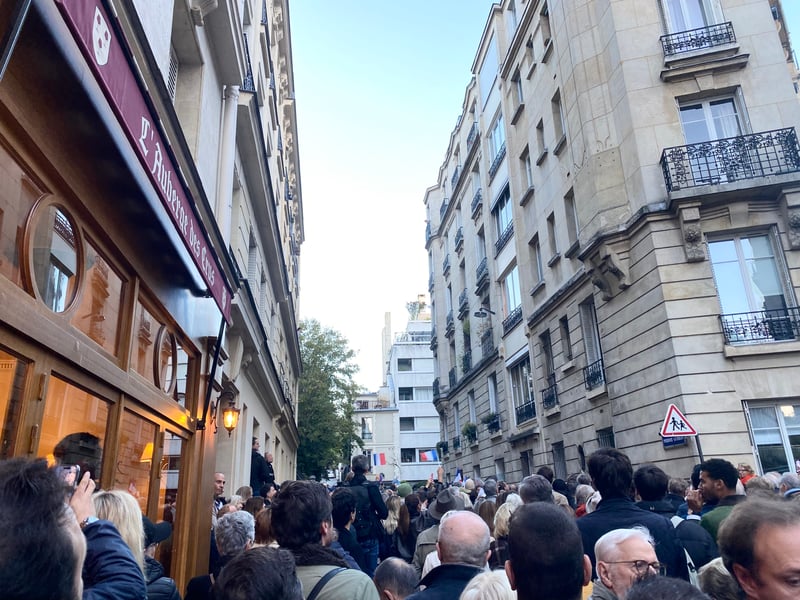
PARIS (CN) — On Tuesday morning in the plush 16th arrondissement of Paris, hundreds of people chanting “Ni-co-las” crowded in narrow streets carving through Haussmannian buildings. They gathered to protest the incarceration of Nicolas Sarkozy, the only former president in France’s modern history sentenced to jail time.
Adele’s “Someone Like You” played in the background and people waved French flags overhead.
“I’m here to support our Sarkozy,” one man who asked to remain anonymous told Courthouse News. His gray hair was tucked behind a newsboy cap. “It’s shameful because it’s vengeance, there’s nothing in the file — it’s pure and simple vengeance, it was organized.”
Sarkozy was found guilty of criminal conspiracy in a case involving Libya’s illegal financing of his successful 2007 presidential campaign. He held office until 2012.
Libya’s former autocratic leader Moammar Gadhafi told media outlets he contributed roughly $58 million to Sarkozy’s coffers, according to prosecutors, in a deal that was apparently in exchange for diplomatic benefits. Sarkozy has maintained his innocence.
“If they absolutely want me to sleep in prison, I will sleep in prison, but with my head held high,” he told a crowd of reporters after the ruling in late September. “Those who hate me so much think they can humiliate me. What they have humiliated today is France, the image of France.”
Some people cried when Sarkozy left his home Tuesday morning, waving to protesters as he kissed his wife Carla Bruni goodbye. The chanting grew louder.
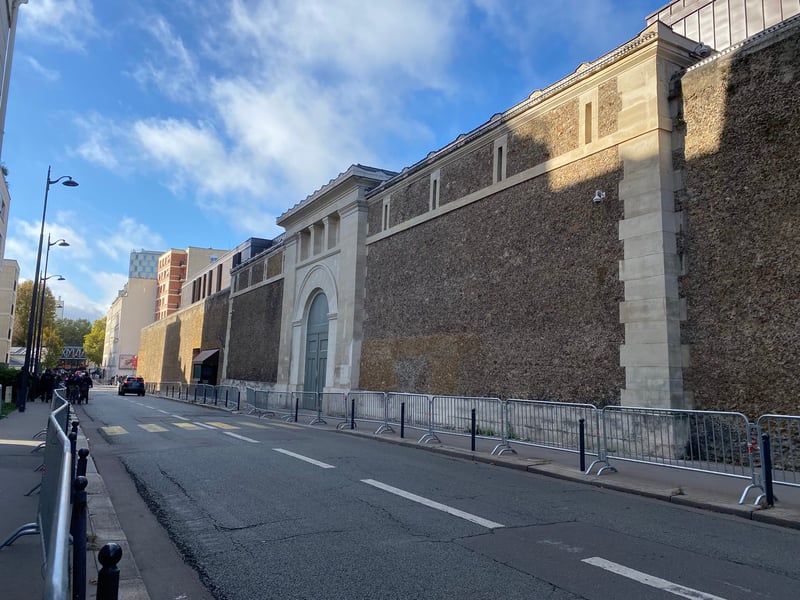
Sarkozy was driven to La Santé prison in southern Paris at roughly 9:40 a.m. Reporters crowded outside the high walls wrapped around its buildings, with barred windows slightly visible through the trees. The former president will be in solitary confinement for security reasons; the roughly 100-square-foot cell reportedly has its own toilet, shower, desk, fridge and TV for a roughly $16 monthly fee.
The case has hung over Sarkozy’s head since 2012, when the French investigative media outlet Mediapart broke the story. Since then, he has been found guilty of trying to bribe a magistrate and illegal campaign financing during his 2012 reelection campaign.
The presiding judge at the trial, Nathalie Gavarino — who is rumored to have taken part in protests against Sarkozy in 2011 — said the planned “corruption” risked undermining citizens’ trust in their elected officials. He was acquitted of three charges of misuse of Libyan public funds, illegal election campaign funding and corruption.
The trial fueled debate over the role of politics in the French justice system. Critics were quick to liken the verdict to the result of a political witchhunt, taking a page from U.S. President Donald Trump’s playbook. Marine Le Pen, the leader of the extreme-right National Rally who was found guilty of embezzlement earlier this year, said on X that the ruling marked a “great danger” for the principles of law, notably the presumption of innocence.
On the ground, protesters echoed the sentiment that the decision was politically motivated. One woman, a longtime Sarkozy supporter who asked not to be named, told Courthouse News the case didn’t make sense since the former president had plenty of money and wouldn’t have needed to find it elsewhere.
“I support Nicolas Sarkozy and I am absolutely horrified by this justice decision,” she said. “The woman who put him in [jail] is anti-Sarkozy and protested against him in 2011, I find it crazy, it’s difficult to be impartial — there’s a big part of the justice system that’s from the left.”
French President Emmanuel Macron was criticized for inviting Sarkozy to the Élysée Palace a few days before his incarceration. Olivier Faure, head of the Socialist party, denounced Macron for “putting pressure on the justice system,” while the National Rally said it was justified.
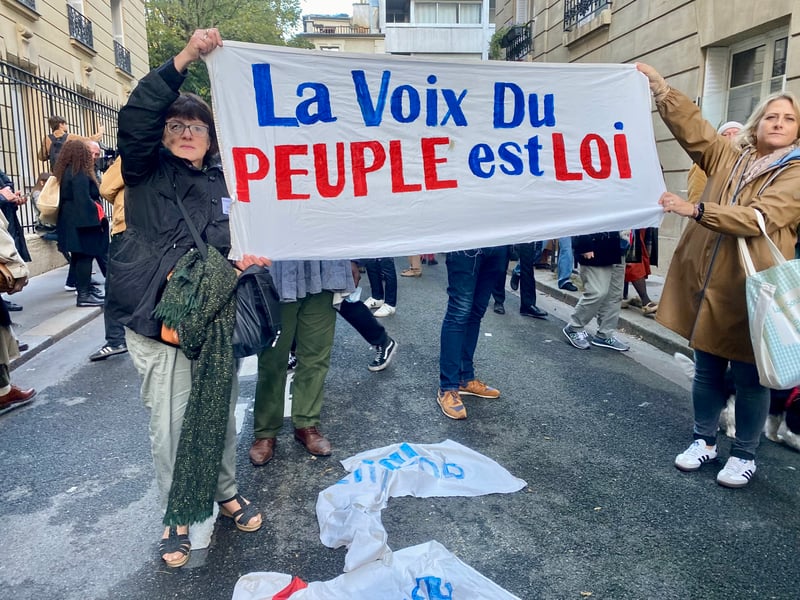
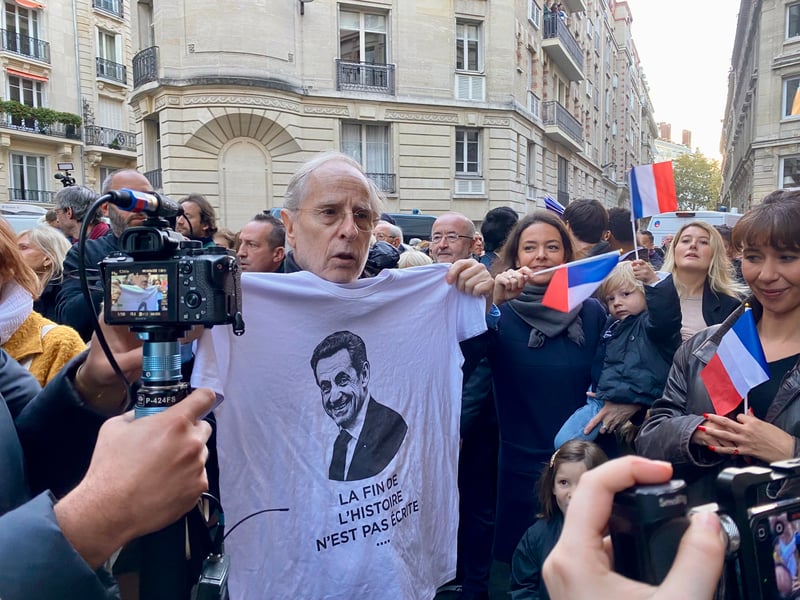
On Tuesday morning, people carried banners reading “The voice of the people is law,” or “He’s the best.” For some, the question of guilt wasn’t the point. Others wore T-shirts with Sarkozy’s face printed on them.
“I don’t think that guilt is even the main subject, the debate,” Elaine Nombret, a local resident carrying a Louis Vuitton bag, told Courthouse News. “I find it very unjust because it’s a very large punishment, unjustified and grave … It was a minor act, it’s not deserving of prison.”
Nearby along the edge of the crowd, Maxime Desgranges, the author of “To Those Who Offended Us — Scenes from Judicial Life,” told Courthouse News that he has been hearing about Sarkozy for his entire life, and wanted to witness the symbolic side of the movement.
Although he believes the decision was justified — the court pored through hundreds of documents examined over weeks of trial — he’s not necessarily in favor of the decision to send Sarkozy to prison, largely because of the current skepticism surrounding the justice system.
“I’m not necessarily for the incarceration, I’m more favorable to financial penalties,” he told Courthouse News. “It could have a counterproductive effect on the justice system, which is being attacked on all sides right now — I want to protect judges, magistrates and the separation of powers.”
After Sarkozy had left for prison, one woman ranted loudly to reporters, waving her arms around microphones and booms.
“You think that all presidents don’t do dirty tricks?” she yelled. “They all do dirty tricks — the entire population does dirty tricks.”
 Follow @lilyradz
Subscribe to our free newsletters
Our weekly newsletter Closing Arguments offers the latest about ongoing trials, major litigation and rulings in courthouses around the U.S. and the world, while the monthly Under the Lights dishes the legal dirt from Hollywood, sports, Big Tech and the arts.