
 Search Articles


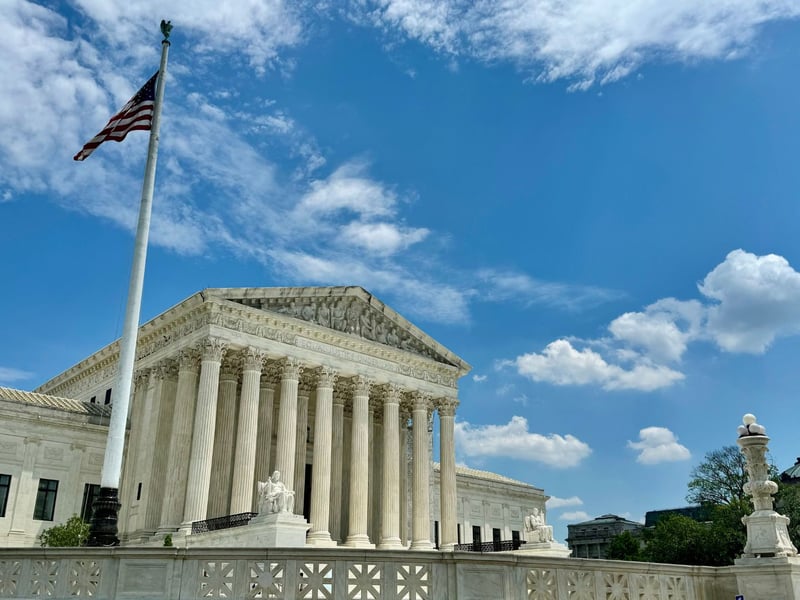
WASHINGTON (CN) — Military reservists must receive the same differential pay for their service regardless of its connection to an emergency, the Supreme Court ruled Wednesday**. **
Nick Feliciano was working as a civilian air traffic controller at the Department of Transportation when the Coast Guard called him into active duty in 2012. With the exception of a 14-month stint at the end of his service, Feliciano served under involuntary active-duty service for the next five years.
When called to active duty, these reservists often receive less pay than they earn in their civilian jobs. To address this gap, congress adopted a “differential pay” statute requiring the government to make up the difference between a federal civilian employee’s military and civilian pay in various circumstances, including when the reservist is called to active duty “during a national emergency.”
Despite performing identical duties during involuntary and consensual active duty service, the Department of Transportation said he wasn’t entitled to differential pay — the gap between reservists’ civilian and military pay — for the latter portion of his service.
But in a narrow 5-4 opinion, the justices sided with Feliciano’s interpretation of “during a national emergency” as promising differential pay to certain federal civilian employees called to active-duty service while a national emergency is ongoing.
The majority rebutted the government’s stance that the pay requires a substantive connection between his service and a particular national emergency.
“The government’s counter arguments are unpersuasive,” Justice Neil Gorsuch wrote for the majority opinion.
Although the word “during” can sometimes imply more than a temporal connection depending on context, in this statutory context a purely temporal relationship is meaningful, the Donald Trump appointee wrote.
“A reservist’s active-duty service during a national emergency bolsters the government’s capacity to address that emergency whether or not his service directly relates to it,” he added.
Gorsuch emphasized the vital role of examining the context in this case, noting that the statute at issue does not elaborate on what kind of substantive tie a reservist’s service must have to a national emergency.
In a dissenting opinion, four of the justices came to a different conclusion. They said the law does not grant a blanket authorization for differential pay and that Congress did not intend for the “during a national emergency” catchall to be all-encompassing.
A reservist is called to serve “during a national emergency” only they are part of an operation responding to one, Justice Clarence Thomas wrote. The George H. W. Bush appointee was joined by George W. Bush-appointed Justice Samuel Alito, Barack Obama-appointed Justice Elena Kagan and Joe Biden-appointed Justice Ketanji Brown Jackson.
Both opinions accused the other’s interpretation of creating larger “superfluity” problems.
“The majority speculates that there could be a day where no national emergencies are in effect,” Thomas wrote. “But, given the five-plus decades of national emergencies against which Congress legislated, that possibility is far too remote to reflect Congress’s likely intention in enacting” the differential-pay statute, he added.
However, Thomas said his interpretive conclusion does not mean that Feliciano should be denied differential pay, as he was being called to active duty to support the Coast Guard’s response to a national emergency.
He said that although he disagrees with the majority’s reading of the statute, he would vacate and remand the case to the Federal Circuit to address whether Feliciano had forfeited any entitlement, as argued by the government.
In his petition for Supreme Court review, Feliciano said the denial violated the Uniformed Services Employment and Reemployment Rights Act. The Merit Systems Protection Board rejected his appeal, finding that reservists must prove they were directly involved in a contingency operation to qualify for the benefit.
His attorney Brian Lawler, who is based in San Diego, applauded the high court’s decision.
“Hopefully the federal agencies who have been denying differential pay for their reserve and guard employees will now do the right thing and grant that pay," Lawler said. “But if not, we are prepared to take as many of those cases as we can to the Merit Systems Protection Board, which will have no choice but to follow the Supreme Court’s precedent.”
 Follow @KelseyReichmann
 Follow @kelseyreichmann.bsky.social
Subscribe to our free newsletters
Our weekly newsletter Closing Arguments offers the latest about ongoing trials, major litigation and rulings in courthouses around the U.S. and the world, while the monthly Under the Lights dishes the legal dirt from Hollywood, sports, Big Tech and the arts.