Search Articles



WASHINGTON (CN) — The Supreme Court refused Monday to block Texas from enforcing age checks to download mobile apps.
A coalition of students filed an emergency application to block the Lone Star State’s age verification requirement after an appeals court let it go into effect last month. They argued that Texas’ App Store Accountability Act lets government officials regulate online speech under the guise of stopping children from accessing harmful content.
In a short, unexplained order, the Supreme Court refused to do so. There were no noted dissents.
Under Texas’ law, all users must verify their age to access the app store. Users under 18 would also need a parent or guardian to link their account and provide consent for every app download or in-app purchase.
Students Engaged in Advancing Texas claimed the law applied content-based restrictions in violation of the First Amendment. For example, they claimed teens could easily access College Board’s app, but downloading Fortnite, watching YouTube or streaming music on Spotify would require parental approval.
“Even if studying for the SAT is for many Americans more useful and rewarding than playing video games, binge-watching videos, or streaming music, ‘these cultural and intellectual differences are not constitutional ones,’” the group wrote in its emergency appeal.
The Texas teens noted the age checks would also restrict minors’ access to news, community forums and platforms for creative expression. Students Engaged in Advancing Texas teaches students about policymaking and civic engagement.
The students were joined by the Computer & Communications Industry Association, which filed a separate emergency appeal arguing that Texas had effectively deputized app stores to police minors’ and adults’ access to vast amounts of online speech.
CCIA’s appeal was similarly denied.
Texas defended the need for parental oversight and consent.
“A minor child who downloads a software application from an app store agrees to contractual terms of service, including whether the child’s location will be tracked, whether the child’s privacy will be protected, whether information from the child’s phone can be sold by the developer, and whether the child waives the right to sue,” the state wrote in opposition. “Before allowing minor children to acquire products from app stores and agree to these terms, Texas requires parental consent, including disclosures to parents about the product and contract terms.”
States must satisfy certain requirements when regulating speech protected by the First Amendment. A lower court found Texas’ law failed strict scrutiny — the highest level of judicial review — because the state could not show a compelling interest in restricting every category of speech covered by the act or adequately connect its goals to the law’s requirements.
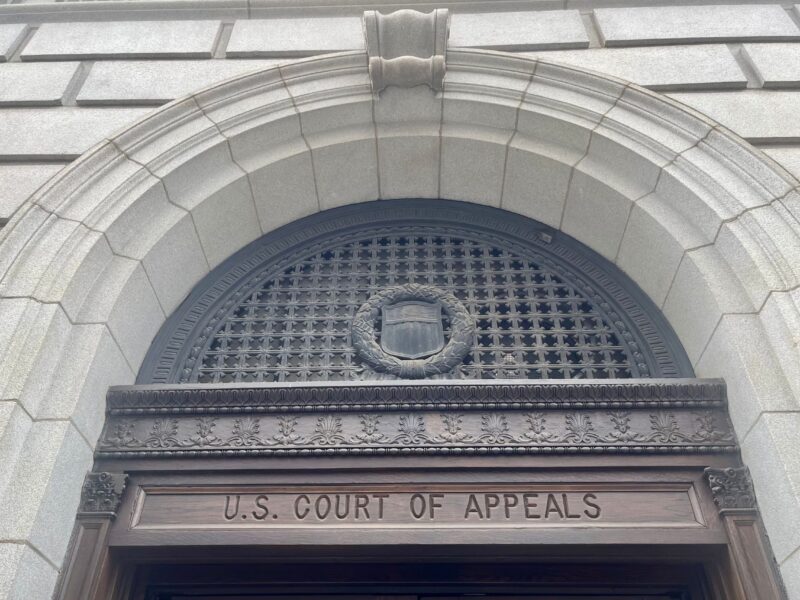
The lower court enjoined the law’s enforcement, but the Fifth Circuit later paused the injunction. The appeals court concluded that the law regulates commercial activity rather than speech itself, giving Texas greater latitude under the First Amendment.
 Follow @KelseyReichmann
 Follow @kelseyreichmann.bsky.social
Subscribe to our free newsletters
Our weekly newsletter Closing Arguments offers the latest about ongoing trials, major litigation and rulings in courthouses around the U.S. and the world, while the monthly Under the Lights dishes the legal dirt from Hollywood, sports, Big Tech and the arts.