
 Search Articles


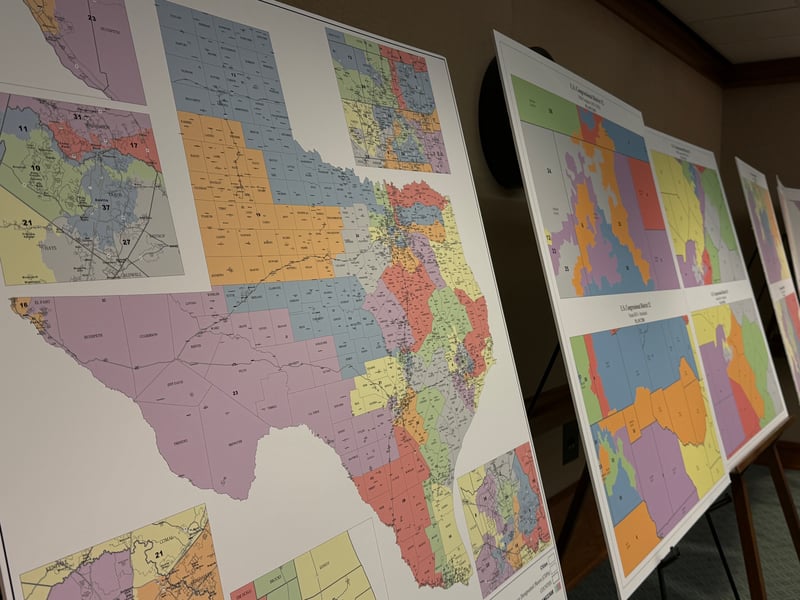
AUSTIN, Texas (CN) – Clearing its final hurdle in the early hours on Saturday, Republicans in the Texas Senate advanced a redistricting plan after a full day of tense debate that ended with the majority party snubbing a Democrat who sought to filibuster the bill.
When the Senate began debating House Bill 4 on Friday morning, it was widely expected Democrats would try every tactic to stall the measure. After roughly 10 hours of speeches, they prepared to launch a filibuster led by Houston Senator Carol Alvarado to extend debate into Saturday and keep their opposition on the record.
Despite their planning, Alvarado’s chances of delaying the vote were dashed when Republican Charles Perry of Lubbock cited a fundraising email Alvarado had sent earlier that day as grounds to cut off debate. Using the message as a pretext, Perry moved to put HB 4 to a final vote, blocking further attempts by Democrats to speak against the bill.
“It is unprecedented to filibuster in the Texas Senate for the purpose of campaign fundraising,” Perry said from the floor of the chamber. “It is highly offensive to the body and violates long-standing traditions of ethics and decorum.”
While criticizing Alvarado’s action for being unethical, Perry concluded that it was potentially illegal as well.
In a video posted to X, Alvarado stated the Republicans, led by Lieutenant Governor Dan Patrick, used a three-hour dinner break to create an excuse to prevent her from speaking for as long as possible.
“What we have seen in this redistricting process has been maneuvers and mechanisms to shut down people’s voices,” Alvarado said. “This new map that we were voting on today had some very significant changes, especially in Houston, in my East End community… [and it] never had an opportunity for public input in the House or the Senate.”
Leaving more to be said, but done for the day, the Senate voted along party lines, 18 to 11, to send HB 4 to Governor Greg Abbott for final approval.
Under the plan, Texas’s 38 congressional districts would be redrawn to give Republicans an edge in five currently Democratic seats. The proposal also fulfills Donald Trump’s request to add GOP seats to help preserve House control after the 2026 midterms.
Bill sponsor Senator King defended the plan throughout Friday’s debate, saying it was legal, improved Republican performance and created more compact districts. In closing, he argued that electing more Republicans to Congress is necessary to secure Trump’s agenda.
“The amazing progress that has been made in just eight months, all of this will end if the Republicans lose [control of] Congress,” King explained. “I am convinced that if Texas does not take this action, there is an extreme risk that the Republican majority will be lost and if it does, the following two years will be nothing but inquisitions, impeachments and humiliation for our country.”
The Senate’s 11 Democratic members each took turns interrogating King, prying into why certain lines were placed where they were and what role he had in the drawing process. However, the area that generated the most impassioned debate was whether race was taken into consideration when the map was created.
Partisan gerrymandering, while irksome to political minorities, is legal according to the U.S. Supreme Court. However, racial gerrymandering has routinely been deemed illegal by the high court in a ruling as recent as 2023.
Democrats repeatedly attacked the bill and King himself, calling the plan racially discriminatory and illegal. They argued it diluted Black and Latino voting power by splitting those communities into rural districts to boost Republican seats.
King stood firm, insisting racial data was never used and that his legal counsel, BakerHostetler, confirmed the map complies with the Voting Rights Act.
Senator Judith Zaffirini, a Laredo Democrat and the chamber’s longest-serving member, disagreed. Before the filibuster attempt was cut short, Zaffirini said that the sooner the map can be presented to a court, the better. She also further criticized Republicans for forcing the bill through.
“[HB 4] fails the test of Section Two [of the Voting Rights Act] and it fails the people of Texas,” Zaffirini said. “The Texas Senate used to be known as the most deliberative body in the world. Those days are over. Today, the majority will prevail, but the rights of minorities were ignored. Outnumbered, outvoted and outgunned, Democrats will go down fighting, having used every available legislative tool.”
As Zaffirini suggested, HB 4 is likely headed for court once Governor Abbott signs it. But even before the Texas map cleared the Senate, Democrats in California advanced their own countermeasure — the Election Rigging Response Act — aimed at adding five congressional seats for their party and neutralizing GOP gains. Unlike in Texas, California voters will decide on Nov. 4 whether to adopt the maps.
Meanwhile, Texas is already mired in related lawsuits, many stemming from House Democrats’ walkout that delayed a redistricting vote for weeks.
When over 50 Democrats fled Texas to deny the House a quorum, Abbott and Texas Attorney General Ken Paxton petitioned the state Supreme Court to declare their seats vacant for abandonment. Paxton said in a statement Thursday he is still pursuing the claim, and Abbott has added punishing Democrats to the special session agenda.
Paxton has also filed a suit against former El Paso Congressman Beto O’Rourke and his nonprofit, Powered by People, accusing them of bribing lawmakers to leave the state. He is seeking to revoke the group’s charter, which would effectively shut down its operations in Texas.
The House Democrats returned to Texas on Monday and were placed under surveillance from state police to compel their attendance for the purpose of passing HB 4 on Wednesday.
With redistricting now out of the way, the legislature is now tasked with meeting Abbott’s remaining requests for the special session, which include passing legislation relating to the deadly July 4 floods, regulating the state’s consumable THC market, restricting which facilities transgender Texans are allowed to use and creating further restrictions to abortion inducing drugs.
 Follow @KirkMcDanie1
Subscribe to our free newsletters
Our weekly newsletter Closing Arguments offers the latest about ongoing trials, major litigation and rulings in courthouses around the U.S. and the world, while the monthly Under the Lights dishes the legal dirt from Hollywood, sports, Big Tech and the arts.