
 Search Articles


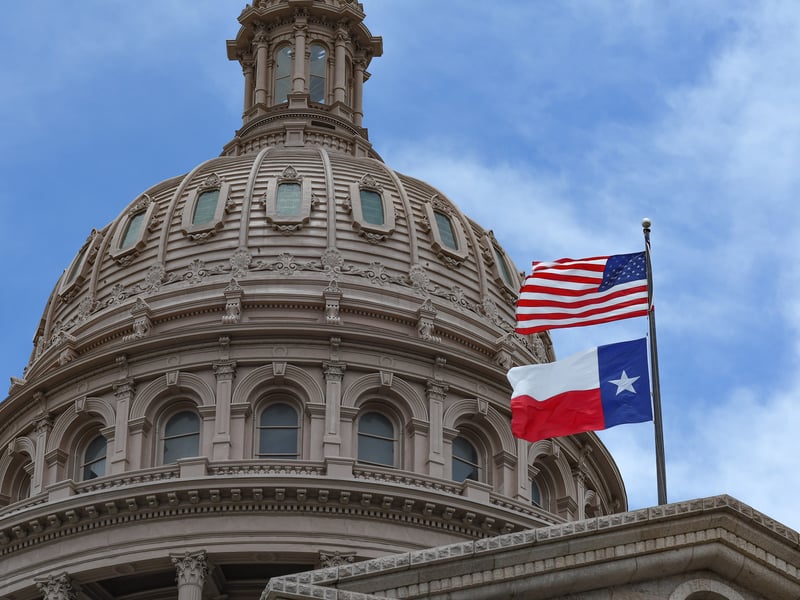
AUSTIN, Texas (CN) — Lawmakers in Texas start a 140-day marathon legislative session on Tuesday, with Republicans hoping to pass priority legislation on education, immigration and new restrictions on LGBTQ topics.
The GOP’s crown jewel for the session is passing a school voucher program. Top Republicans, including Governor Greg Abbott and Lieutenant Governor Dan Patrick, have long fought to give students state funds to use at schools of their choice, including private and religious institutions.
Similar measures came up during the 2023 regular session and in a fall special session that year. Despite overwhelming support from a majority of Republicans in both chambers, Democrats and some rural Republicans in the Texas House managed to block the legislation. During the interim, Abbott campaigned against Republicans who defied the party, leading to their ousting during the 2024 primaries. This has bolstered Republicans’ numbers on the issue, putting them in a comfortable position to pass the legislation.
Johnathan Covey, director of policy at Texas Values — a conservative Christian policy and advocacy group based in Austin — said in an interview that he is confident the upcoming session will deliver a second chance to implement a voucher system.
“Governor Abbott has worked hard to put himself in a position where school choice does become a successful issue, and we get universal school choice,” said Covey. “So I do think the handwriting is on the wall for that.”
Several bills offer slightly different amounts students could expect to receive. One proposal, House Bill 1657, would create a so-called “education savings account” for eligible children, allocating students 90% of the funds that would otherwise have gone to the school district where they enrolled.
Similarly, under House Bill 212, the state would reimburse students either the cost of tuition at a private school of their choice, or 80% of the average expenditures and operating costs per student, whichever is less.
House Bill 612 would instead dispense the average amount the state would have spent on students into their accounts. The proposal would also require anyone who legally challenges this or any other so-called “educational choice” laws to pay the attorney fees of “the prevailing party.”
Covey said that parents will have more options for their children’s educational path, which includes sending their children to religious schools. And though critics have voiced concern about using state funds for religious ends, he thinks the law is on their side.
Emily Witt, senior communications and media strategist at Texas Freedom Network — a progressive advocacy group — believes the Republican push to create vouchers presents a host of issues.
“Vouchers are intertwined, it’s a public education issue, it’s a huge religious freedom issue, and I think it’s an LGBTQ equality issue,” said Witt. “We know that if people choose to use vouchers, or the public schools in their districts close and they have to use vouchers, what’s available to them is private religious schools that can discriminate against kids and families.”
Lawmakers are also rebooting a drive to require public schools to display the Ten Commandments in classrooms. After their failed attempt in 2023, Texas conservatives looked on jealousy as neighboring Louisiana passed a similar bill.
Lieutenant Governor Dan Patrick took to X after the Louisiana bill was signed into law to say, “Texas WOULD have been and SHOULD have been the first state in the nation to put the 10 Commandments back in our schools.” Patrick promised to pass such legislation in 2025.
So far, legislators have filed two bills to make good on Patrick’s call, House Bill 1009 and House Bill 1348. Both would mandate that all elementary and secondary public school classrooms have a 16-by-20-inch durable poster of the commandments conspicuously displayed. The bills would require schools to accept posters donated by the public or to use public funds to buy posters that meet the requirements.
Witt said, “It’s a violation, and it sends the message to kids that Christianity is the religion that matters here in the state, and if you think differently, then you are not as important.”
Were the state to adopt such a measure, a legal challenge is all but guaranteed. The Louisiana law has beenblocked from enforcement by a federal judge while the suit against it continues.
Lawmakers will also be looking to place further restrictions on what subjects can be discussed in public school classrooms. Senator Bob Hall, a staunch conservative Republican from Edgewood, filed Senate Bill 86, which would prohibit classroom instruction of sexual orientation and gender identity. The bill rings a similar note to a controversial Florida statute that critics dubbed the “Don’t Say Gay" bill.
Aside from broad educational reforms, Republican lawmakers will return to the issue of immigration. For nearly five years, state lawmakers have taken steps to play a larger role in deterring people from illegally entering from Mexico.
In this vein, House Bill 354 would establish the Border Protection Unit, a law enforcement agency tasked with policing the land and waters of the border region, similar to the U.S. Border Patrol. Another proposal, House Bill 1072, would create a database of migrant children’s biometric data. One reason outlined in the bill for collecting such data is to monitor how frequently a child crosses the border.
 Follow @KirkMcDanie1
Subscribe to our free newsletters
Our weekly newsletter Closing Arguments offers the latest about ongoing trials, major litigation and rulings in courthouses around the U.S. and the world, while the monthly Under the Lights dishes the legal dirt from Hollywood, sports, Big Tech and the arts.