
 Search Articles


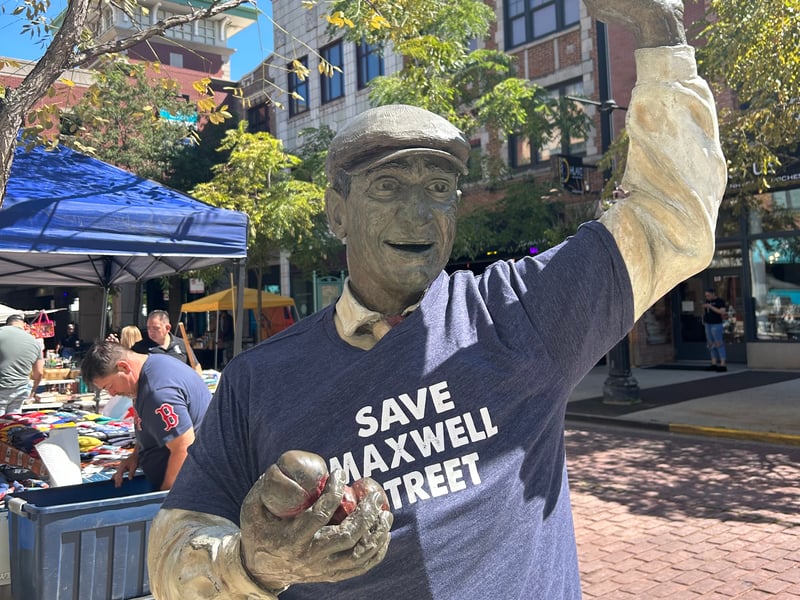
CHICAGO (CN) — A rendition of the blues standard “Crossroads” blared through speakers at Maxwell Street Market on a recent Saturday as families browsed for tchotchkes and homewares.
Started by Jewish immigrants in the 19th century, Maxwell Street Market has long been a hub for the city’s immigrant community, helping them find community and get their foothold in business.
Pulitzer Prize-winning Chicago writer Ira Berkow called this place “Ellis Island of the Midwest.” Others call it the Blues Capital of the World, after the famous musicians like B.B. King, Muddy Waters and Howlin’ Wolf who once played along its original nine blocks. Whatever its name, people have flocked to this vibrant open-air market since even before the Chicago City Council formally certified it in 1912.
In its heyday, there could be upwards of 1,200 vendors lined up along Maxwell Street, selling everything from used records to empanadas. The city’s iconic hot dog — mustard, onions and bright green relish — likely had its start here as the “Maxwell Street Polish.”
Over the years, though, city officials have moved the market twice and imposed new rules on vendors — and longtime market supporters say they’ve made the market less vibrant. On a recent weekend, there were just around 30 stands selling goods like baseball cards, handbags and childrens’ books.
Now, after several moves and a large decline in vendors, Maxwell Street Market is back to its original location, on Maxwell Street between Halsted Street and Union Avenue.
Mayor Brandon Johnson moved the market back to its original location in May. In a news release, Clinée Hedspeth, head of the city’s Department of Cultural Affairs, said the relocation aimed to “further enhance this already-bustling neighborhood,” offering “an exciting lineup of vendors and entertainment that celebrates the important legacy of the market while reflecting the diversity of the city itself.” But in the view of many longtime attendees, it’s only exacerbated the market’s decline.
Steve Balkin, a former economics professor at Roosevelt University, has been visiting Maxwell Street market for 50 years.
In an interview, he described how the market started changing in the early 1990s, when Richard M. Daley was mayor.
To accommodate the growing University of Illinois at Chicago, Daley in 1994 moved the market up several blocks from Maxwell Street to Canal Street. The changes pushed minority groups out of the near westside neighborhood and prompted Balkin and other activists to form the Maxwell Street Historic Preservation Coalition, now known as the Maxwell Street Foundation.
In place of the old working-class market came new public projects for tourists and wealthy residents, according to Balkin. Daley “needed to improve the tax base so he could build Millennium Park and Maggie Daley Park and the Bean,” he said. “He needed a place to get money, so he pushed the people out of here.”
Vendor numbers dropped precipitously after the market moved, from around 1,200 to about 500.
As Balkin sees it, Daley and other officials hoped to kill the market altogether. The original Maxwell Street catered to low-income minority groups, and there were long-simmering tensions with brick-and-mortar stores that followed Blue laws, rules that restrict business on Sunday in keeping with Christian traditions.
“Store owners in the other parts of the city didn’t like it,” Balkin said. “There was always pressure to get rid of Maxwell Street.”
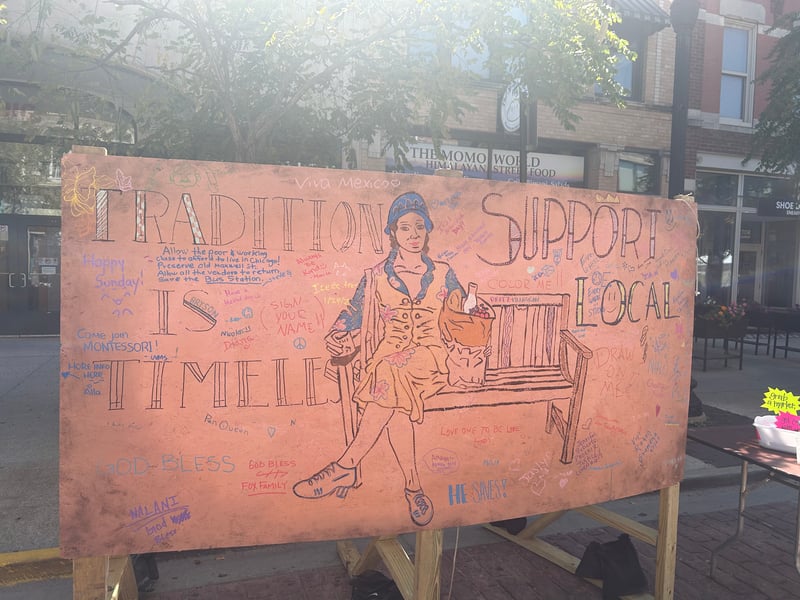
Then there were the market’s mafia connections, for better or worse. In the old days, so-called “Market Masters” presided over Maxwell Street, collecting fees and mediating disputes.
As part of Daley’s overhaul, Chicago removed the Market Masters and instead transferred control of Maxwell Street Market to the City Council. That had the effect of making the market more expensive and exclusive, with just 500 vendor licenses given out via lottery.
When Maxwell Street Market moved to Canal Street, Balkin thought it would fail.
Instead, it kept going at a smaller scale. Balkin credits that success to Caroline Shoenberger, longtime head of Chicago’s Department of Consumer Affairs, who Balkin says shared an affinity for the market and worked tirelessly to keep it afloat.
“She came there every Sunday,” Balkin said. “When she had family visiting from out of town, she would bring her family there too.” Once she retired in 2008, “that’s when things started going downhill at the New Maxwell Street market," Balkin said. (Shoenberger did not respond to requests for comment for this story.)
After Shoenberger left, the market moved again, this time a few blocks west to Desplaines Street.
Once again, Balkin was pleasantly surprised with the result. Even after the market’s second move, “it still had, like, a 100 or so vendors," he said. “Even though it was a lot less than 500, it still seemed to have a vibrancy to it.”
It was under former Mayor Lori Lightfoot and current Mayor Brandon Johnson that Maxwell Street really started to decline, Balkin said.
In public statements, the Johnson administration has framed its recent decision to move the market back to Maxwell as a way to celebrate and honor an important part of Chicago culture. Balkin views it more cynically, as an effort to kill the market for good. He pointed to the fact that just two businesses remain from the original Maxwell Street, as well as new rules that only allow nearby restaurants to sell food there. “Maxwell Street is very well-known among foodies,” he said, “so to not have any of that is a clear example of the elimination of culture.”
Balkin wants the market to be free of bureaucratic red tape and restrictions about who can be a vendor and what they can sell. He thinks anyone should be able to set up shop on Maxwell Street and sell their wares, like they could when the market first began many years ago.
Other market advocates are more hopeful, believing that by working with city officials and playing the long game, they can bring Maxwell Street back to its former glory.
Laura Kamedulski, president of the Maxwell Street Foundation, said the group has met with city alderpeople to discuss strengthening the market. “I’m hopeful with success [this summer], they may get more vendors to participate,” she said.
Maybe, as Kamedulski and city officials hope, returning Maxwell Street Market to its original location will help revitalize the Windy City’s once-booming immigrant market. Or maybe, like many things in life, Maxwell Street Market will fade into history, replaced by something else.
A couple miles south of the original market, thousands of vendors now flock to the open-air Swap-o-Rama flea market in Chicago’s Back of the Yards neighborhood. That includes several vendors from Maxwell Street. There, recent arrivals sell everything from tamales and clothes to homewares and even appliances. Even Maxwell Street enthusiasts like Balkin can’t help but admit that it’s got some of Maxwell Street Market’s old vibrancy.
 Follow @RosenCaitlyn
Subscribe to our free newsletters
Our weekly newsletter Closing Arguments offers the latest about ongoing trials, major litigation and rulings in courthouses around the U.S. and the world, while the monthly Under the Lights dishes the legal dirt from Hollywood, sports, Big Tech and the arts.