
 Search Articles


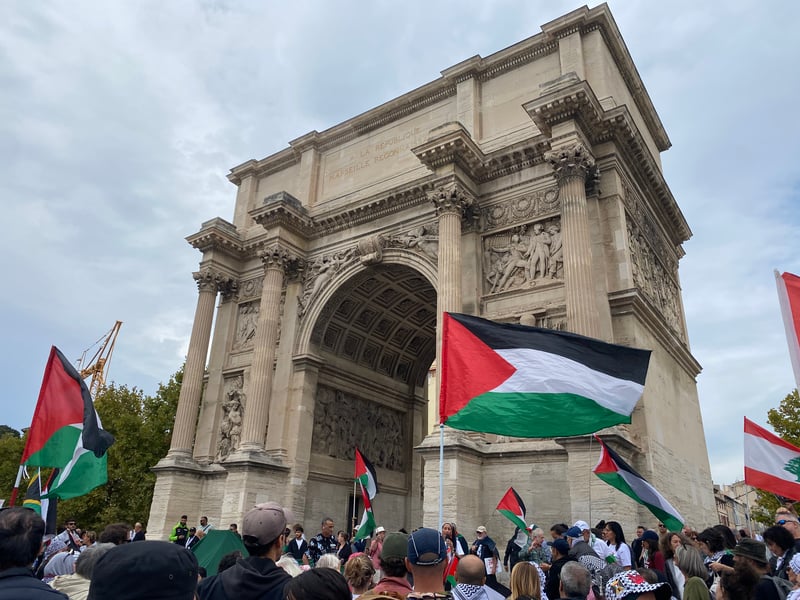
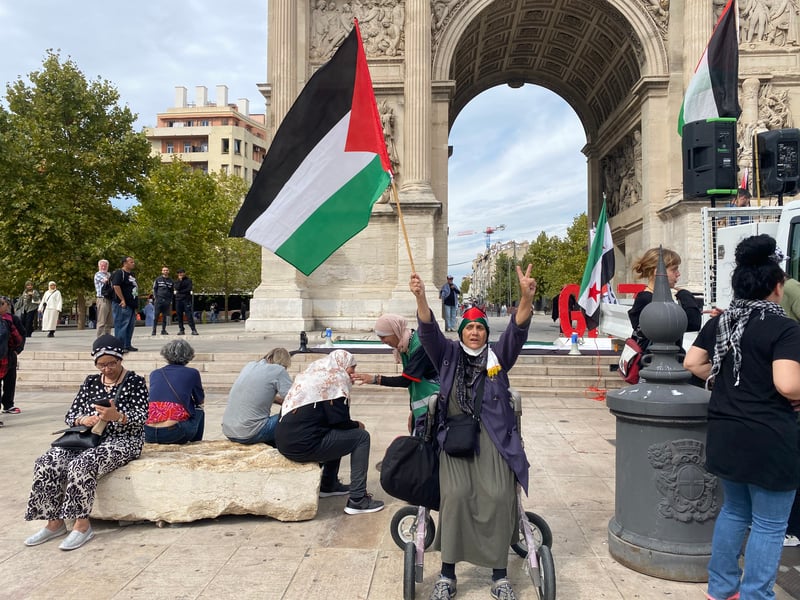
MARSEILLE, France (CN) — “Listen to me!” Samia Bensalem, a 72-year-old woman sitting in a wheelchair and holding a Palestinian flag, told Courthouse News on Sunday. “[French President Emmanuel Macron] waited two years for Gaza to be in ruins and everyone to be dead to recognize Palestine — he waited for the population to be exterminated.”
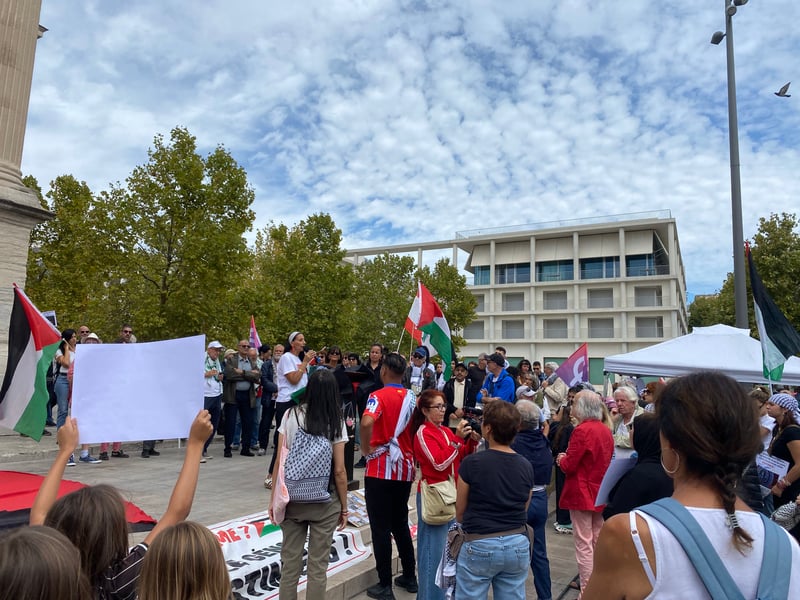
Bensalem was sitting on the outskirts of a pro-Palestine demonstration in Marseille, France’s second-biggest city along the Mediterranean. Every Sunday since Oct. 7, 2023 — when Hamas launched a terrorist attack in Israel that killed about 1,200 people, prompting a two-year-long assault on Gaza — between 200 and 2,000 protesters gather here to show solidarity with Palestinian citizens.
Almost two years into the war, an estimated 1,983 Israelis and over 66,000 Palestinians have been killed. Although Israel has banned foreign journalists from freely entering Gaza, local journalists and social media footage have shown starving children, hospital bombings and swaths of cities reduced to rubble. As Israeli Prime Minister Benjamin Netanyahu continues to intensify his strikes on the territory, international states are under increasing pressure to intervene.
On Monday, France led the charge for governments to recognize Palestinian statehood at the U.N. General Assembly. But amid growing humanitarian concerns over Israel’s conduct in Gaza, which the U.N. declared a “genocide” in a report released on Sept. 16, growing protests around Europe demonstrate citizens’ frustrations with government leaders. Although many agree the recognition was necessary, people want more.
“It’s a great advancement, particularly for France,” one woman attending the protest in Marseille, who asked to remain anonymous, told Courthouse News. “Even if we don’t like Macron, he’s the one that started the movement — he did something strong and courageous.”
But she explained she was showing up in solidarity with the Palestinian cause and to pressure the government to take more concrete actions to achieve peace.
“It’s time that the government, and all European governments, put sanctions on Israel to suffocate them,” she said. “Because they suffocate citizens through starving them and trapping them.”
Andrea Teti, an associate professor of political science at the University of Salerno and associate editor of Middle East Critique, told Courthouse News that although recognition might have seemed like a “significant victory” before Oct. 7, 2023, it now feels more like a “PR exercise or attempt to deflect criticism.”
In his view, although the silver lining might be that Western states now have pressure to act by acknowledging Palestinians’ right to self-determination, recognizing statehood doesn’t change any existing obligations that governments have under international humanitarian law. Instead, governments could start by leveraging soft power, like suspending Israel from cultural or sporting events, which sends a signal without making an enormous political difference. Commercial pressure would be another option.
On Sunday, the Global Sumud Flotilla — an international aid flotilla comprised of 47 civilian boats — restarted its journey toward Gaza after stopping for repairs. It was struck by drones armed with grenades and irritants on Wednesday, and despite not taking direct responsibility, Israel has previously said it will use any means necessary to stop the boats from reaching their destination.
This prompted Italy, Spain and Greece to deploy navy ships to monitor the flotilla, and Turkey is watching its journey through drones. This is one of the most direct — and public — interventions from military forces since Oct. 7, and French citizens are rallying for France to join the group. The boats are expected to reach Gaza on Sept. 30 or Oct. 1.
“The way I look at it is the leaders just feel that this is a moment when they really have to get off their hands… They’ve been sitting on their hands for too long, and they feel that they have to intervene at this particular stage,” Neil Quilliam, an associate fellow in the Middle East North Africa program at Chatham House, told Courthouse News.
Quilliam was at a conference last week and spoke to several European politicians who said they felt this is a moment when European values are under threat.
“Unless they stand up and live and breathe the value set that they propose and want to project to other states around the world, they’re just going to get lost,” he said. “So it’s also a kind of value dimension to this now.”
Quilliam added that, in the broader outlook, U.S. President Donald Trump could be a blocking point for governments seeking to take direct action. He explained that while France and Saudi Arabia are pushing for a two-state solution, the U.S. would probably have to be on board to make that a reality.
“I mean, who can really put pressure on Trump? That’s the challenge,” Quilliam said. “And obviously, number one, he’s unpredictable. … And number two, he’s demonstrated so far that support for Israel is unequivocal.”
 Follow @lilyradz
Subscribe to our free newsletters
Our weekly newsletter Closing Arguments offers the latest about ongoing trials, major litigation and rulings in courthouses around the U.S. and the world, while the monthly Under the Lights dishes the legal dirt from Hollywood, sports, Big Tech and the arts.