
 Search Articles


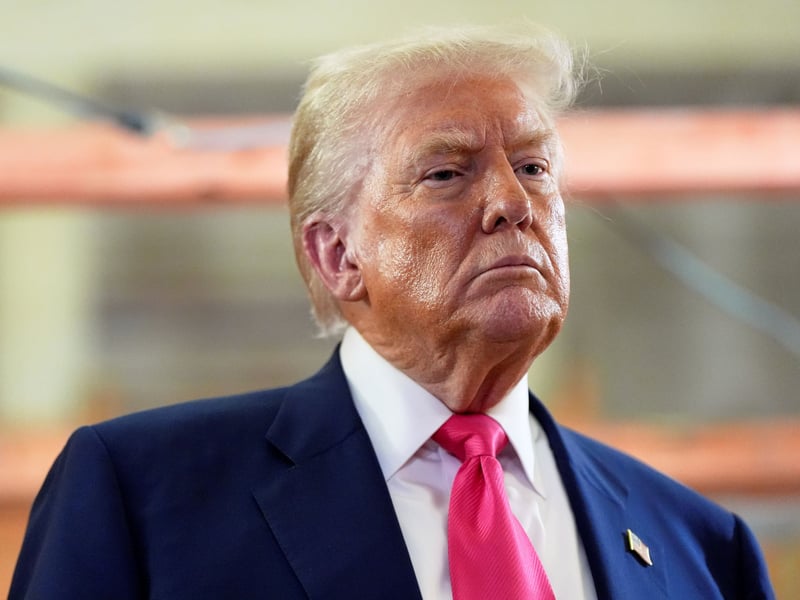
WASHINGTON (CN) — President Donald Trump urged the Supreme Court on Friday to enforce a State Department policy preventing transgender individuals from using their preferred sex designation or “X” on passports.
“Private citizens cannot force the government to use inaccurate sex designations on identification documents that fail to reflect the person’s biological sex — especially not on identification documents that are government property and an exercise of the president’s constitutional and statutory power to communicate with foreign governments,” U.S. Solicitor General John Sauer wrote in the emergency appeal.
The application is the Trump administration’s 27th emergency appeal since January. By contrast, the George W. Bush and Barack Obama administrations filed only eight total over their 16-year tenure.
In his latest Supreme Court request, Trump sought to stay a lower court injunction letting transgender individuals choose M, F or X based on gender ideology. The White House argued the injunction had “no basis in law or logic.”
“That injunction injures the United States by compelling it to speak to foreign governments in contravention of both the president’s foreign policy and scientific reality,” Sauer wrote. “As the lower courts have declined to stay this baseless injunction pending appeal, this court’s intervention is warranted.”
Trump pointed to the court’s recent precedent in United States v. Skrmetti , where the conservative majority upheld Tennessee’s ban on gender-affirming care for minors as it did not violate the equal protection clause. The administration argued the passport policy was likewise constitutional because it applied equally regardless of sex.
“Just as it would not be discrimination based on national origin to define a person’s national origin as the person’s birth country rather than the country with which the person self-identifies, so too it is not discrimination based on sex to define a person’s sex as the person’s immutable
biological classification rather than the sex with which the person self-identifies,” Sauer wrote.
In January, Trump signed an executive order requiring government-issued identification documents to list sex “at conception.” The State Department quickly updated its passport rules, blocking transgender, intersex and nonbinary people from using their preferred gender designations.
Seven individuals sued the administration, calling the policy discriminatory and preventing them from obtaining passports that matched who they are. The lawsuit called Trump’s policy arbitrary and capricious, arguing it violated their rights to travel and privacy under due process and their First Amendment rights.
Jon Davidson, senior counsel for the ACLU’s LGBTQ & HIV Project and representing the plaintiffs, defended the lower court’s injunction, saying the administration’s actions threatened transgender individuals’ rights.
“As the lower courts have found, the State Department’s policy is an unjustifiable and discriminatory action that restricts the essential rights of transgender, nonbinary and intersex citizens,” Davidson said in a statement. “This administration has taken escalating steps to limit transgender people’s health care, speech and other rights under the Constitution, and we are committed to defending those rights, including the freedom to travel safely and the freedom of everyone to be themselves without wrongful government discrimination.”
A Massachusetts court issued an injunction in June, preventing the administration from enforcing the policy. The court found the policy to be motivated by animus toward transgender individuals.
An appeals court refused to stay the injunction. At the Supreme Court, Trump argued that it was entirely rational for him to reject gender identity. However, he also argued that the court had no authority to challenge his policy even if it wasn’t rational.
Trump pushed the justices to stay the injunction, arguing that it interfered with government speech.
“Even worse, the injunction forces the government to misrepresent the sex of passport holders to foreign nations by using markers that reflect ‘the false claim that males can identify as and thus become women and vice versa,’” Sauer wrote. “And because of the injunction’s classwide scope, the government will be forced to contradict both biological reality and its own declared policy on potentially ‘tens or hundreds of thousands’ of passports.”
The Supreme Court did not immediately request a response from the individuals challenging Trump’s passport policy.
 Follow @KelseyReichmann
 Follow @kelseyreichmann.bsky.social
Subscribe to our free newsletters
Our weekly newsletter Closing Arguments offers the latest about ongoing trials, major litigation and rulings in courthouses around the U.S. and the world, while the monthly Under the Lights dishes the legal dirt from Hollywood, sports, Big Tech and the arts.