Search Articles


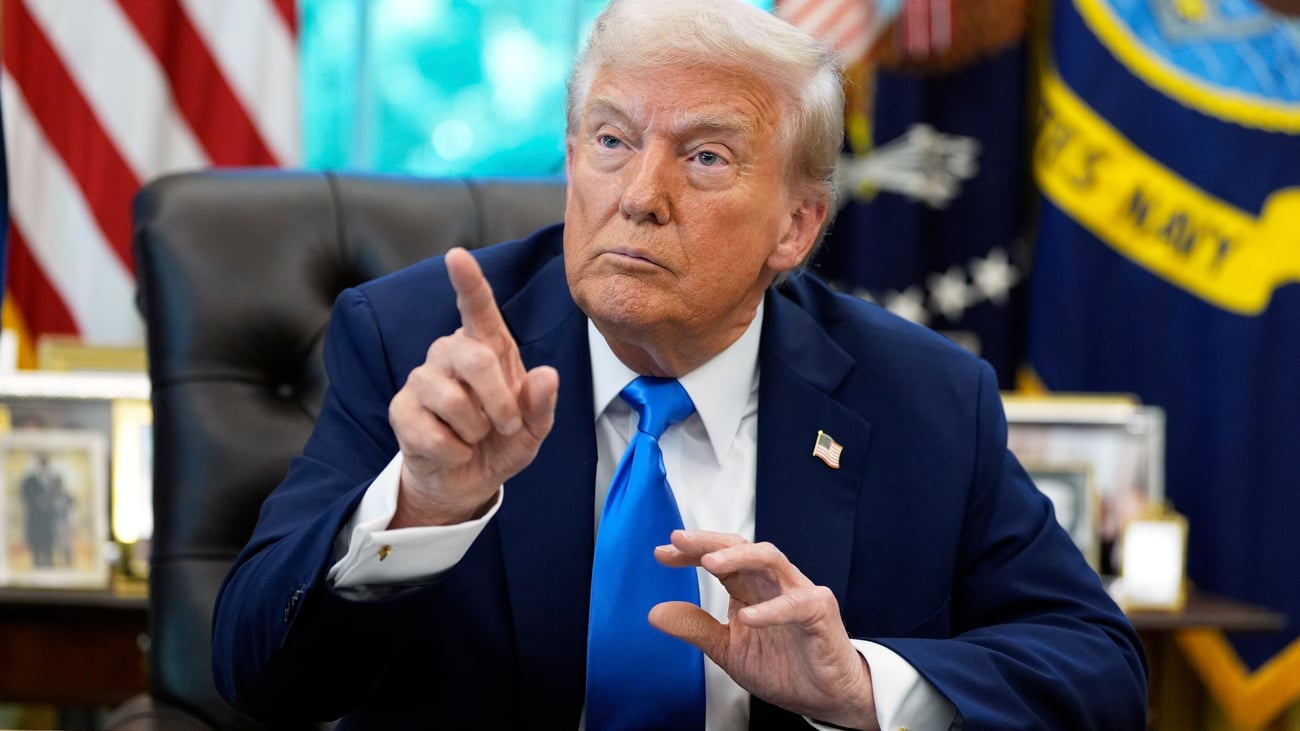
RIO DE JANEIRO (CN) — The Trump administration on Thursday announced that Brazil’s two largest criminal organizations, Primeiro Comando da Capital (PCC) and Comando Vermelho (CV), would be classified as specially designated global terrorists.
The U.S. State Department also said it intends to classify both groups as foreign terrorist organizations, effective June 5.
In a statement, Secretary of State Marco Rubio said the two groups have thousands of members and operate criminal networks that extend beyond Brazil’s borders. He said the move is part of the administration’s broader strategy of targeting cartels and transnational criminal organizations across the region.
PCC and CV are considered the most powerful organizations among 88 officially documented criminal groups operating in Brazil. Both emerged from Brazil’s prison system between the late 1970s and the early 1990s and now operate in every Brazilian state and its federal district, home to the capital, Brasília.
Their activities have expanded beyond drug trafficking into money laundering, extortion, cargo theft, illegal mining, illegal logging and territorial control. Brazilian authorities estimate the PCC alone has about 40,000 members.
Brazil’s government pushed back on the announcement Friday.
In a statement of its own, the administration of President Luiz Inácio Lula da Silva acknowledged that PCC and CV use terror tactics in communities where they operate but argued that both groups are profit-driven criminal organizations primarily involved in drug and arms trafficking.
The government said that on April 16, it had presented a proposal to the U.S. State Department focused on intelligence-sharing and international cooperation, including stronger controls on money laundering and weapons trafficking.
“Unilateral, non-negotiated measures can weaken efforts to fight criminal organizations and result in actions that put innocent lives at risk,” officials said in the statement. “Brazilians, through their institutions, laws and security forces, are the ones who decide how crime is classified and fought within Brazil.”
The Lula administration also criticized members of the Bolsonaro family for seeking support from U.S. authorities to influence matters related to Brazilian public security.
Brazilian Senator Flávio Bolsonaro, the son of former President Jair Bolsonaro who is expected to run for president in the October elections, celebrated the designation in a video posted on social media after making a last-minute trip to Washington on Tuesday, where he was received by President Donald Trump at the White House.
In the video, Bolsonaro credited the designation to lobbying efforts during the trip. He thanked Trump and Rubio for what he described as a decision made “on behalf of the Brazilian people.”
“While Lula went to Trump begging for support for PCC and CV, I worked to have them treated as terrorists, which is what they are,” Bolsonaro said.
Diego Nunes, a criminal law professor at the Federal University of Santa Catarina, noted that Brazil’s 2016 Anti-Terrorism Law links terrorism to acts motivated by xenophobia, discrimination or prejudice intended to spread widespread fear.
Criminal organizations are covered by separate laws. Brazil’s 2013 Organized Crime Law defines them as structured groups of four or more people with a division of tasks, formed to commit serious or transnational crimes for financial or other gain.
Brazil’s Anti-Faction Law, enacted in March, targets ultraviolent criminal organizations, paramilitary groups and private militias that threaten public order, collective security or the functioning of institutions.
Dennis Pacheco, a social scientist who studies PCC’s expansion at the National Institute on Violence, Power and Public Security, said the group evolved through four stages: consolidation inside prisons, expansion into the streets, national growth and, since 2016, internationalization.
That international expansion, he said, did not change the organization’s underlying purpose.
“We are talking about commercial strategies, not political, ideological or religious objectives,” Pacheco said.
Pacheco warned that treating criminal organizations as terrorist groups could complicate cooperation between Brazil and the United States.
“One side will be dealing with a fiction and the other with reality,” he said. “One side sees a public security problem involving a profit-driven criminal organization. The other sees a group with political and religious objectives.”
Maurício Stegemann Dieter, a criminal law professor at the University of São Paulo, described the designation as a shift from public security to national defense — one that could affect cooperation on investigations involving drug trafficking, money laundering and international financial flows. He also warned against a more militarized approach.
“Whenever repression of criminal organizations, particularly those linked to drug trafficking, shifts to the armed forces, we see increased lethality, corruption and a documented pattern of failure,” Dieter said.
Dieter also noted that the designation could have consequences beyond law enforcement. He said that Brazilian companies with operations in the United States, Brazilians holding assets there and firms with U.S. subsidiaries could face greater scrutiny if they were suspected of having links to groups classified as terrorist organizations.
Fabio Machado, a corporate law partner at the firm Andrade Maia Advogados, said those risks must be viewed in the context of organized crime’s growing presence in Brazil’s formal economy.
As criminal groups infiltrate seemingly legitimate business chains, he said, banks and companies face greater exposure to indirect ties with structures used for money laundering.
Institutions with branches, assets or dollar-clearing operations in the United States could become subject to stricter reporting and asset-freezing obligations. Foreign correspondent banks might reduce limits, impose additional compliance requirements or terminate relationships altogether.
“The terrorist designation elevates that risk to a new level,” Machado said.
Carlos Gustavo Poggio, a specialist in U.S.-Latin America relations, said the designation should be understood as part of a broader Trump administration strategy.
He said the classification allows Washington to deploy tools developed and expanded after the Sept. 11 attacks to target terrorist organizations.
“I would not say there are risks to Brazilian sovereignty or that this signals preparations for any kind of attack,” Poggio said. “It has more to do with the tools the United States is willing to use.”
Courthouse News reporter Marília Marasciulo is based in Brazil.
Subscribe to our free newsletters
Our weekly newsletter Closing Arguments offers the latest about ongoing trials, major litigation and rulings in courthouses around the U.S. and the world, while the monthly Under the Lights dishes the legal dirt from Hollywood, sports, Big Tech and the arts.