Search Articles


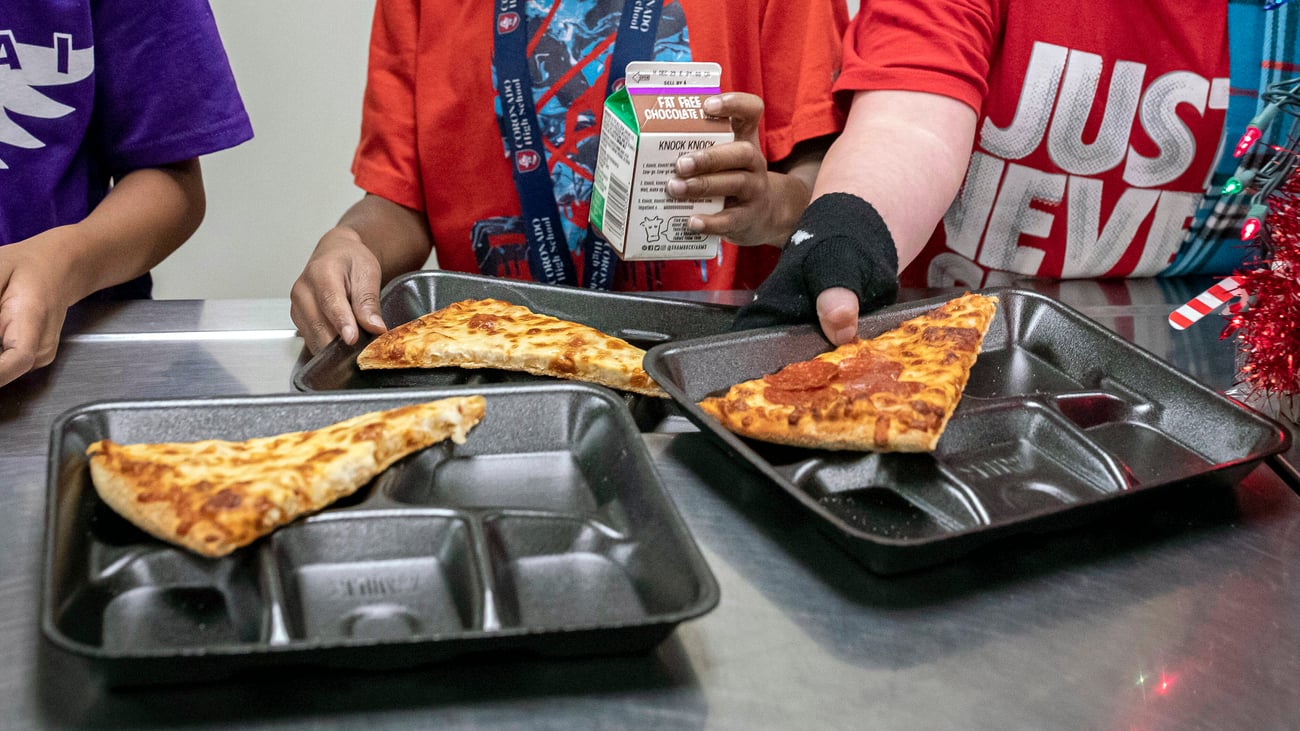
MANCHESTER, England (CN) — The U.K. government plans to ban deep-fried foods and limit sugary products under sweeping changes to school meals, as more than one in three children leave elementary school overweight or obese, officials said Monday.
The proposals would stop schools in England from serving fried foods, restrict desserts to once a week and curb daily access to items like pizza and sausage rolls.
Ministers say fruit will replace most sugary snacks during the school week.
Education Secretary Bridget Phillipson said: “Today we are launching the most ambitious overhaul of school food in a generation, and it is long overdue,” saying that every child “deserves to have delicious, nutritious food at school.”
Health Minister Sharon Hodgson said children currently consume twice the recommended amount of sugar, adding that “we’re determined to reduce the child obesity epidemic.”
The changes will be subject to a nine-week consultation before final rules are set for September, with implementation planned for 2027.
A growing epidemic
The push reflects growing concern about what children eat in school and the consequences and cost to public health.
Government data shows more than one in three pupils are overweight or obese by the time they leave elementary school, while tooth decay linked to high-sugar diets is the leading cause of hospital admissions for children ages five to nine.
Researchers have also found that about 64% of calories in English school meals come from ultra-processed foods, a category linked to obesity and long-term health risks.
The reforms would apply to both elementary and high schools and come alongside an expansion of free breakfast programs.
Officials say more than 500 new breakfast clubs will open this month, building on 750 already in place and reaching up to 142,000 children.
Chef and longtime campaigner Jamie Oliver welcomed the move, saying school food has been a decadeslong concern.
In the early 2000s, Oliver led a high-profile campaign that exposed poor-quality meals and pushed the government to remove heavily processed items, including the once-popular “turkey twizzlers” from menus.
“School food is the U.K.’s most important restaurant chain,” Oliver said, arguing that schools provide up to two-thirds of a child’s daily diet during term time.
Advocates say the latest changes could build on those earlier reforms by tightening enforcement.
Anna Taylor, executive director of the Food Foundation, said stronger standards and monitoring could mark a turning point for child health.
“This must be the moment the whole sector pulls together,” she said, pointing to an opportunity to “initiate a seismic shift” in nutrition and food education.
However, school leaders warn that funding will be critical.
A 2025 survey found the average cost of producing a school meal is about $4.60, roughly $1 more than current government funding for free meals.
Tom Middlehurst of the Association of School and College Leaders said improving food quality is widely supported but must be “implemented in a practical way,” including covering rising costs.
Politicians divided but public in broad support
The centrist Liberal Democrats supported the ban while urging the government that funding must keep pace with food prices.
The Green Party backed the proposals but called for broader action, including universal free school meals. “Real change also means tackling the root causes of the 14% of households facing food insecurity — the cost of living and low pay,” the party said in a statement.
Reform UK, the right-wing, anti-immigration party, criticized the plan as excessive state control. “Banning foods from school menus won’t solve childhood obesity,” a party spokesperson said, arguing the policy limits choice and adds pressure on schools.
Despite a divided Parliament, public opinion appears firmly behind tighter rules.
A survey of 1,000 parents found 96% want school meals made with fresh or nutritious ingredients, and 83% support stronger government standards.
In addition, 66% of parents worry their children are offered unhealthy options, with 76% admitting their kids tend to pick food high in sugar, fat and salt.
The debate marks the latest chapter in the evolution of British school meals.
Nutrition improved in the 1960s with investment in kitchens and fresh cooking but declined in later decades as processed foods and budget cuts took hold.
By the 2000s, rising obesity rates prompted reforms, many driven by Oliver’s campaign that reintroduced healthier options.
Courthouse News reporter James Francis Whitehead is based in England.
 Follow @jayfranklinlive
Subscribe to our free newsletters
Our weekly newsletter Closing Arguments offers the latest about ongoing trials, major litigation and rulings in courthouses around the U.S. and the world, while the monthly Under the Lights dishes the legal dirt from Hollywood, sports, Big Tech and the arts.