
 Search Articles


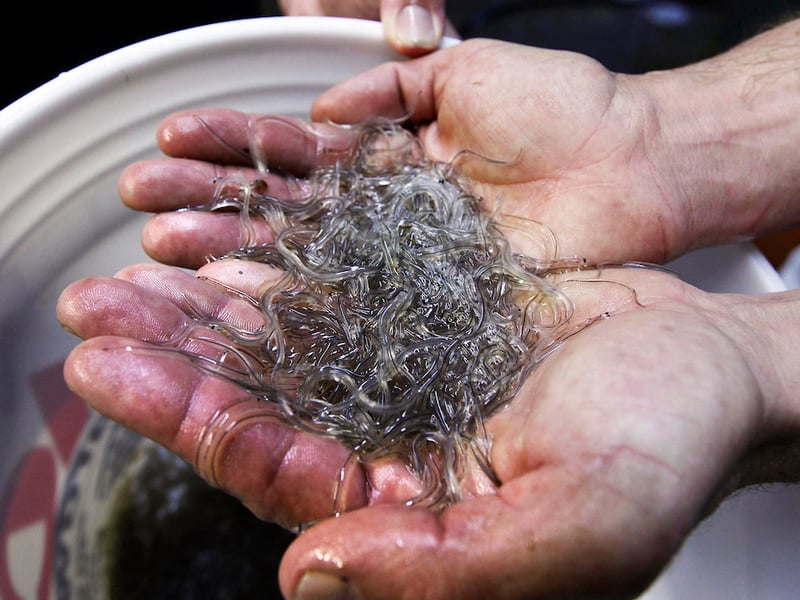
MANHATTAN (CN) — A New York state-recognized Indigenous tribe asked a Second Circuit panel Wednesday to prevent state regulators from limiting the tribe’s harvesting of glass eels, claiming a 17th century treaty grants the tribe unequivocal fishing and whaling rights.
The Unkechaug Indian Nation, which began harvesting the baby eels in 2010, filed a complaint in 2018 against New York environmental regulators after facing criminal prosecution for harvesting critically overfished glass eels outside of their reservation.
But a Brooklyn federal court judge granted the state’s Department of Environmental Conservation summary judgment after finding the 17th century order did not preempt state fishing regulations.
In front of the Second Circuit panel Wednesday, the tribe said the state’s refusal to acknowledge the treaty ignores the historical context that grants the tribe protection from regulators seeking to limit its fishing practices.
The tribe adds the treaty — which stems from an order issued in 1676 by New York’s colonial governor Sir Edmond Andros — prevented interference in the tribe’s fishing practices out of fear the tribe would revolt against Long Island settlers.
But New York’s environmental agency says the order isn’t federal law, as the tribe claims, because it predates the formation of the United States by a century and has not been ratified by Congress.
“The Andros order is not federal,” Elizabeth Brody, an attorney for the state agency, said Wednesday. “The Andros order could not have been made under the authority of the United States when it was signed in 1676.”
The Unkechaug Nation responded that the order’s roots in colonial times does not make it obsolete.
“The only way the state of New York identifies Indian tribes is through colonial relationships,” James Simmermeyer, an attorney for the Unkechaug Indian Nation, said Wednesday.
Pointing to testimony from its expert witness John Strong, an ethno-historian who studies Long Island Native Americans, the Unkechaug Indian Nation said the lower court should not have excluded his testimony that would have explained the order’s proper historical context and how it’s applicable to federal law.
“The Unkechaug Indian Nation traces its heritage and its relationships back to the English colony, which was then transferred to the state of New York when it became a state,” Simmermeyer said.
But U.S. Circuit Judge Gerald E. Lynch, a Barack Obama appointee, pointed to a portion of Andros’ order which grants the tribe fishing rights “according to the law and custom of the government.”
“I thought that your expert said that this is the way the Indians would have interpreted it,” Lynch said. “That this is a treaty that says the tribe could fish unmolested so long as they complied with the same laws that applied to everyone else.”
Brody, speaking for the government, added then that even if the order was recognized as federal law, this clause shows that the tribe must still adhere to state regulations. Though the eels are not categorized as endangered in the U.S., overfishing has substantially decreased their populations.
“It does not grant unlimited fishing rights,” Brody said. “Instead, the order plainly states that the nation’s fishing rights are subject to the law and custom of the government.”
But Simmermeyer said that the treaty has to be analyzed through the lens of how Native Americans would have interpreted it at the time, despite what it may appear as on its face.
“You have to really look at the fact that when they allowed Indians to fish with or without Christians, that was a big deal and that was specifically a treaty allowing them to do something that would not be common,” Simmermeyer said.
The panel also included U.S. Circuit Judges Beth Robinson and Sarah A.L. Merriam, both Joe Biden appointees. The court did not indicate when it would make a decision.
 Follow @NikaSchoonover
Subscribe to our free newsletters
Our weekly newsletter Closing Arguments offers the latest about ongoing trials, major litigation and rulings in courthouses around the U.S. and the world, while the monthly Under the Lights dishes the legal dirt from Hollywood, sports, Big Tech and the arts.