Search Articles


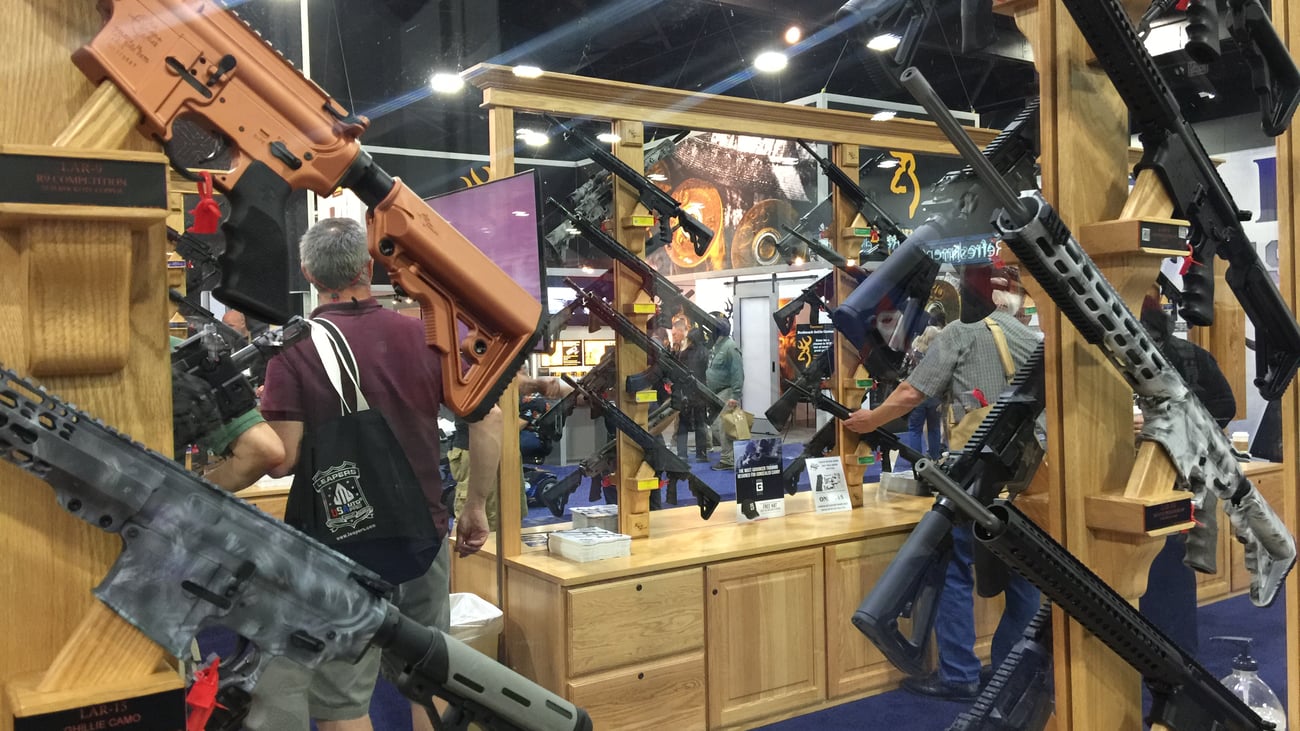
SPOTSYLVANIA, Va. (CN) — A local Virginia judge declined Thursday to block a statewide ban on the sale of high-capacity semiautomatic rifles and pistols, rejecting a challenge from gun owners who argued the measure violates the militia clause of the state constitution.
Democratic Governor Abigail Spanberger signed the bill, passed by the Democratic-controlled legislature, banning the sale, manufacture, purchase and transfer of the weapons commonly referred to as assault weapons beginning July 1. The ruling from Spotsylvania County Circuit Judge William Glover marks a setback for gun rights activists challenging the ban in state and federal courts.
Unlike other challenges, the Spotsylvania County gun owners, represented by former Virginia Attorney General Ken Cuccinelli, argued against the ban outside the context of the Second Amendment.
The plaintiffs — consisting of two Virginia gun owners, a firearms instructor and a gun shop — sued under the militia clause of the Virginia Constitution, which states: “That a well regulated militia, composed of the body of the people, trained to arms, is the proper, natural, and safe defense of a free state, therefore, the right of the people to keep and bear arms shall not be infringed; that standing armies, in time of peace, should be avoided as dangerous to liberty; and that in all cases the military should be under strict subordination to, and governed by, the civil power.”
The plaintiffs argued the provision independently prohibits the General Assembly from disarming the people. They claimed the clause creates an individual right for Virginia citizens to possess and bear arms as part of the unorganized militia. They further argued that historic precedent entitles members of the unorganized militia to possess civilian equivalents of military firearms.
“The arms that the body of the people must possess are those suitable for militia service — arms whose nature and purpose make them capable of contributing to the common defense,” the plaintiffs said in their complaint. “In every era, this has meant the weapons that bear a functional relationship to those issued to the organized military forces of the commonwealth and the nation.”
The plaintiffs sued Virginia State Police Superintendent Colonel Jeffrey Katz, Spotsylvania County Commonwealth’s Attorney Ryan Mehaffey and Spotsylvania County Sheriff Roger Harris. Mehaffey agreed with the plaintiffs’ position.
Katz, meanwhile, argued the militia clause is not self-executing and asserted that the state constitution vests authority over the unorganized militia in the governor. He also argued that the balance of interests weighs in the commonwealth’s favor.
“SB749 reflects the General Assembly’s judgment that assault firearms and large capacity magazines pose distinctive public safety risks,” Katz said in his response brief. “These weapons and magazines drive higher casualties, more rounds fired and greater lethality in mass-casualty events; magazines over 15 rounds are rarely needed for lawful self-defense; and American governments have long regulated weapons and accessories that create special public-safety risks."
Glover found that the plaintiffs established a likelihood of irreparable harm if the ban takes effect and is later determined to be unconstitutional. However, he disagreed with their interpretation of the militia clause.
“The court is currently persuaded that both the history and practice surrounding Sec. 13 establish no individual right to possess military-style weapons by members of the unorganized militia,” Glover wrote.
George Mason drafted the militia clause before the Virginia Convention adopted it in June 1776.
“When George Mason drafted the militia clause in 1776, he was not creating a new institution or articulating an aspirational ideal,” the plaintiffs said. “The General Assembly cannot now undo by statute what the constitution requires by its text and has been practiced since the earliest days of the colony."
Cuccinelli did not respond to a request for comment.
“The court’s decision today in Curtis v. Katz is an important step in ensuring that Virginia’s assault weapons ban will go into effect on July 1,” Virginia Attorney General Jay Jones said in a statement. “The commonwealth will defend against any appeal in this case and will continue to defend the assault weapons ban in every case to keep Virginians safe.”
Subscribe to our free newsletters
Our weekly newsletter Closing Arguments offers the latest about ongoing trials, major litigation and rulings in courthouses around the U.S. and the world, while the monthly Under the Lights dishes the legal dirt from Hollywood, sports, Big Tech and the arts.