
 Search Articles


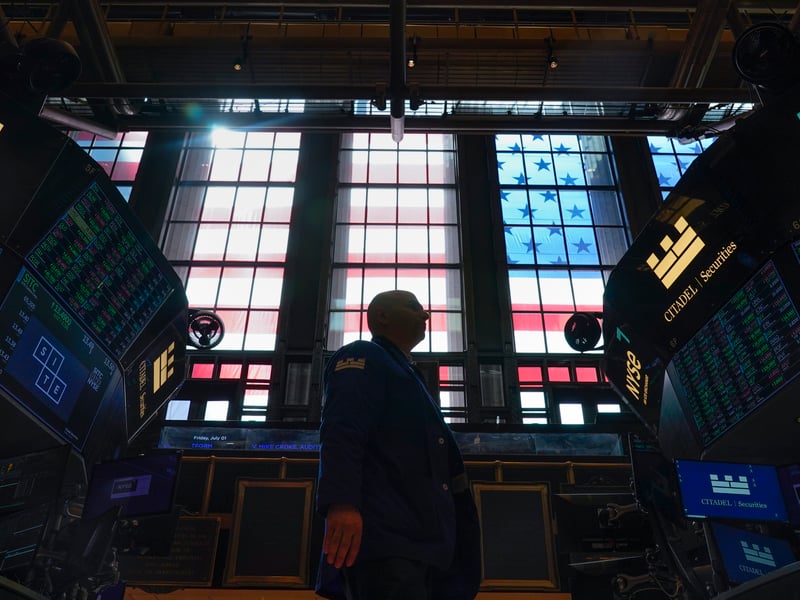
MANHATTAN (CN) — Plugging the holes left from last week’s sell-off, investors rallied this week as positive inflation and growth data has — for now — mostly dispelled recession worries.
The one-two punch of dropping inflation and robust consumption has all but assured Wall Street that the Federal Reserve will announce a 0.25% rate cut when the central bank meets next month, with possible wiggle room for greater cuts to come.
“Disinflation is crystal clear in the data now,” said Jamie Cox, managing partner for Harris Financial Group. “The runway is clear for the Fed to cut rates in September."
“If data like this persists, the Fed will have plenty of room to cut rates further this year," Cox said.
The Dow Jones Industrial Average gained throughout the week on the good news, ending Friday’s session up 1,162 points from last week. The S&P 500 and Nasdaq also come close to recouping their recent losses and closed 201 points and 886 points higher for the week, respectively.
The 1% jump in retail sales, reported Thursday by the U.S. Census Bureau, blew away the 0.3% median forecast and shows just how durable the U.S. consumer has been.
“If the economy continues to be resilient – especially in conjunction with slowing inflation, then the Fed can begin a rate-cutting cycle without the economy entering recession, and history shows this is an extremely positive environment for the stock market,” said Chris Zaccarelli, chief investment officer at the Independent Advisory Alliance.
A double dose of inflation reports this week — that is, the consumer price index and producer price index, both released by the U.S. Bureau of Labor Statistics — also helped prop up markets.
On Wednesday, the CPI showed prices increasing just 0.2% in July, with an annualized inflation print of 2.9% — both figures within economists’ forecasts.
Core prices for goods, which exclude volatile energy and food prices, fell by 0.3% in July, while core prices for services increased 0.3%.
Overall, the CPI came in at the lowest level in three years. The main driver of prices is shelter, which increased by 0.5% month-over-month and accounted for nearly three-fourths of the overall increase over the last 12 months. Food prices at both groceries and restaurants also gained 0.2% last month.
The day prior, the PPI was even better, showing a 0.1% increase in July. Experts attributed that better-than-expected result to the larger-than-expected decline in trade service prices. The annualized increase for the PPI was 2.2%.
Hourly earnings outpaced the CPI last month, which also helps with inflation, primarily with low- and moderate-income consumers. Over the past 12 months, real average hourly earnings increased by 0.7%.
Some experts warn Wall Street will no longer be swayed by falling inflation. “[D]eclining inflation is now expected by markets and, as such, is no longer a new, positive catalyst, as markets never discount the same information twice,” wrote Tom Essaye of the Sevens Report.
He noted that “Goldilocks growth” and bigger-than-expected interest rate cuts from the Fed will cause the biggest jumps in markets going forward in the near-term.
“However, if growth disappoints and [Fed Chair Jerome] Powell isn’t overtly dovish, look for part (or most) of this now week-long bounce in stocks to be reversed in a potentially painful way,” he wrote in an investor’s note.
 Follow @NickRummell
Subscribe to our free newsletters
Our weekly newsletter Closing Arguments offers the latest about ongoing trials, major litigation and rulings in courthouses around the U.S. and the world, while the monthly Under the Lights dishes the legal dirt from Hollywood, sports, Big Tech and the arts.