
 Search Articles


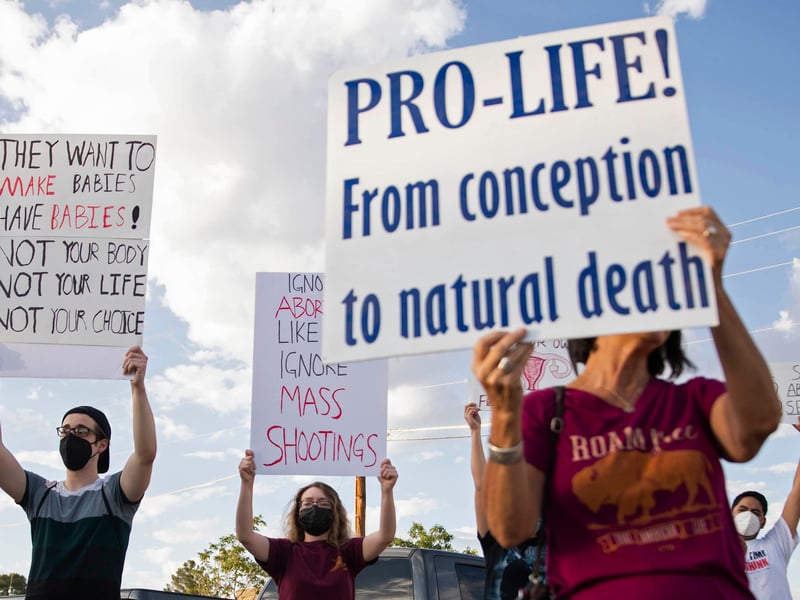
(CN) — The Ninth Circuit Court of Appeals ruled Thursday that Cedar Park Assembly of God of Kirkland, Washington, can’t sue the state over a law requiring that employer sponsored health care plans provide abortion access to members.
The ruling, though, was a curious one. The panel struck down the federal court’s ruling in favor the defendant’s motion for summary judgement, but also struck down the court’s rejection of a motion to dismiss for lack of standing. In other words, a reversal with the same outcome: the church losing its five-year legal battle.
To make matters more confusing, the Ninth Circuit effectively reversed itself; in 2021, the appellate court had found that the church did have standing.
“The majority’s ruling is shocking,” said Rory Gray, Senior Counsel with Alliance Defending Freedom, who represented the Pentecostal church in court, said in a written statement. “It bars the courthouse doors to a church who has actually been required to include abortion coverage in its employee health plan for five years in violation of everything it believes. That conclusion is unprecedented and contradicts what the Supreme Court, other circuits, and the Ninth Circuit itself already said.”
The case stems from the intersection of two laws. The 2018 Parity Act mandates that health care providers cover contraceptives and, if they cover maternity care, also cover abortions. Meanwhile, according to a 1995 conscientious objection statute, “No individual or organization with a religious or moral tenet opposed to a specific service may be required to purchase coverage for that service or services if they object to doing so for reason of conscience or religion.” Yet that law came with a loophole: Insurance providers still had to cover the services, even if employers weren’t paying for them.
In 2019, regulators clarified that Washington state employers could opt out of abortion coverage in their health plans, but the insurance companies still had to cover abortions. In practice, this has meant that the abortions are sometimes paid for by the insurance companies, sometimes by nonprofits and sometimes by the state government. But the providers must have a plan in place, and they must effectively inform their enrollees about it.
Cedar Park had, prior to 2018, provided its many employees with a health care plan from Kaiser Permanente that excluded abortion coverage, because the church believes that abortion and some forms of contraception are sins. In 2019, Kaiser informed the church that it could no longer exclude abortion coverage from its plan “due to the enactment of” the recently passed Parity Act. The church sued the state in federal court, saying the Parity Act violated the First Amendment and calling it “the kind of deliberate religious persecution that our country was founded to prevent.”
U.S. District Judge Ben Settles agreed to dismiss the suit, finding that the church lacked standing because a different insurer had offered Cedar Park a health plan that excluded abortions. But a Ninth Circuit panel composed of three George W. Bush appointees overturned that ruling, finding the church had plausibly argued that Kaiser had ended its non-abortion health plan because of the Parity Act, and the other health plans were not necessarily comparable.
Back in the lower court, the parties engaged in discovery, when it was revealed that the church had “received six or seven bids for plans that offered coverage for services consistent with Cedar Park’s religious beliefs.” Both parties moved for summary judgement.
The arguments revolved not around standing, but whether the Parity Act violated the First Amendment. Judge Settles ruled in favor of Washington, writing: “SB 6219 does not favor secular conduct. The law does not, for example, exempt non-religious organizations while targeting religious organizations. There is no evidence that SB 6219 was enacted to burden or target religion.”
Both sides appealed to the Ninth Circuit. This time, the three-judge panel consisted of U.S. Circuit Judges Susan Graber, a Bill Clinton appointee, Lucy Koh, a Joe Biden appointee and Consuelo Callahan, a George H.W. Bush appointee. And this time, the panel ruled, 2-1, that Cedar Park did not, in fact, have standing to sue. Callahan, the sole appointee of a Republican president, dissented.
“Under the conscientious-objection statute and the Parity Act, employers with a religious objection need not purchase coverage for abortion services for their employees,” Graber wrote in the majority opinion. “Employees simply have the right to obtain such coverage through their insurers when their employers do not provide it. That distinction is not one of semantics, but of substance.”
Graber also pointed out that nothing in the record suggests the church’s employees or family members have used, plan to use or would even consider using their workplace health care coverage for the services to which the church objects.
The church argues that an employer who purchases a no-abortion health plan still “indirectly facilitates” abortion access. But Graber rejected that argument as well, writing: “The general disapproval of the actions that others might decide to take does not create standing, even when some tenuous connection may exist between the disapproving plaintiff and the offense-causing action.”
In her dissent, Callahan wrote: “Cedar Park finds itself in a catch-22: It either contracts with an insurer for a health plan that covers abortions (in violation of its religious belief) or it cancels its health plan (in violation of state and federal law). Before the Parity Act, Cedar Park was able to provide its employees with a health plan in accordance with its religious beliefs. Now, because of the Parity Act, it cannot do so. The majority fails to appreciate our prior opinion where we found that Cedar Park has standing, and now uses the new procedural posture of this case to boot Cedar Park from court.”
Rory Gray, the lawyer representing the church, suggested it would take the matter to the U.S. Supreme Court, writing in a statement: “We’ll be considering our legal options to keep this important case going because no church should be forced to fund abortions.”
 Follow @hillelaron
Subscribe to our free newsletters
Our weekly newsletter Closing Arguments offers the latest about ongoing trials, major litigation and rulings in courthouses around the U.S. and the world, while the monthly Under the Lights dishes the legal dirt from Hollywood, sports, Big Tech and the arts.