
 Search Articles


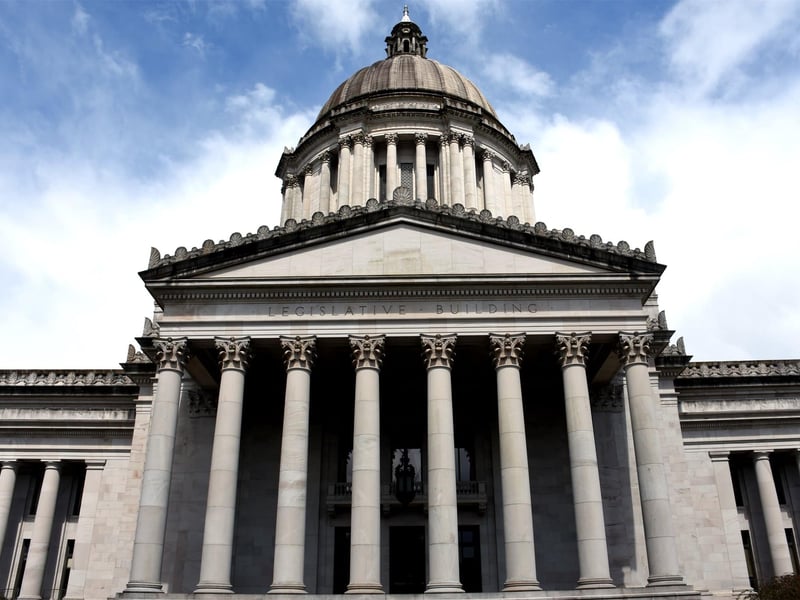
OLYMPIA, Wash. (CN) — A government watchdog group asked the Washington Supreme Court on Thursday to rethink an exemption to the state’s public records disclosure law after a state agency denied it access to union bargaining materials.
In October 2022, the Citizen Action Defense Fund requested records relating to the state and unions’ opening offers in negotiations for statewide collective bargaining agreements for the years 2023-2025. The Washington State Office of Financial Management refused the request six days later, under the theory that the records were exempt due to the “deliberative process exemption.”
Under the deliberative process exemption, preliminary drafts, notes, recommendations and memorandums that express opinions or formulate policies are exempt unless publicly cited by an agency.
The office explained that while tentative agreements had been signed and would soon be publicly available, the underlying material remains exempt until the governor signs the budgets.
Unsatisfied with the response, the group challenged the record request denial. A lower court ruled in the group’s favor, but the Washington Court of Appeals reversed that decision, siding with the government.
Before the Washington Supreme Court on Thursday, the group argued that upholding the decision would create a “broad new exception” to the Public Records Act.
“ Public agencies can withhold pre decisional documents, but once the decision is made, we the public get to know how and why,” said Jackson Wilder Maynard Jr., an Olympia-based attorney representing the Citizen Action Defense Fund. “Here, the Court of Appeals wrongly held that an agency that had signed a contract could continue to keep the public in the dark.”
Maynard argued that the deliberative process exemption should be interpreted in favor of timely disclosure and does not indefinitely shield records from public access.
Justice Sheryl Gordon McCloud asked the group when it thought the deliberative process exemption would kick in, noting that the agreements and contracts require multiple steps.
Maynard countered that the requested documents were not pre-decisional because the Office of Financial Management had made a decision when it entered into the agreement. Further, he argued that the office incorrectly conflated itself with the state.
“ Our request was not to the state,” Maynard said. “Our request was to an agency, which is exactly what the Public Records Act requires and allows us to do.”
Justice Steven Gonzalez pressed Maynard on the conditional nature of the agreement of which the group sought records.
“You’ve made a distinction agency by agency, and it’s not the state and the union bargaining, but the conditional aspect of it is between the state and the union, isn’t it?” Gonzalez asked.
Maynard conceded that the collective bargaining act applies to the state, but argued that the Public Records Act applies to an agency and in particular the agency’s obligation once it makes a decision.
“[The Office of Financial Management] are asking you to craft a broad exception to the public records act that has not existed before, saying that a requester must wait to get records from one agency until every other agency in the state that’s part of a deliberative process has made a decision,” Maynard said.
The government countered that disclosing records earlier would interfere with the collective bargaining process.
Alicia O. Young, an attorney with the Washington State Attorney General’s Office, argued that the office correctly denied the public records request because the deliberative process was well underway and the collective bargaining agreement had several steps left to complete.
“ The state cannot either implement or adopt a collective bargaining agreement until the director of OFM has certified it as financially feasible,” Young said. “The governor has requested legislation to implement the agreement, and the legislature has in fact enacted legislation to implement the agreement.”
Justice Debra Stephens asked Young to clarify if there was a “backdoor” exemption contained within the deliberative process exemption.
“ Is there any argument here that given this collective bargaining process, and the disclosure requirements specifically contained in that statute, that that somehow impacts our interpretation of the [Public Records Act?]” Stephens asked.
Young responded that the state is the decision maker, rather than the Office of Financial Management, in collective bargaining and the statutes governing the process show an intent for transparency.
“ Collective bargaining as a whole is a matter of legislative grace, and the legislature here has set up a system where the legislature gets to decide whether the collective bargaining agreement is ultimately adopted by the state,” Young said.
Young explained that in the event that the legislature chooses not to fund a contract, it qualifies as a continuation of an earlier process rather than triggering a new deliberative process.
“ This is not a final decision of the state until the legislature has actually enacted legislation,” Young said.
Further, she argued that revealing the records related to the collective bargaining process before they are finalized chills the process.
“ Initial bargaining proposals just like other deliberative records don’t reflect the positions of the state yet,” Young said. “ There’s also a risk that there will be less candor and less free thinking exchange of ideas when those deliberations are conducted in a fishbowl.”
Young also clarified that the records the group sought were disclosed after the budget bill was enacted into law, but urged the court not to adopt a rule opening up everything related to that decision to public disclosure.
On rebuttal, Maynard implored the court to consider how multiple contingencies delay timely access to the records for the public, and that making records available following negotiations would cut down on that time.
“ The harm that is complained about is public availability and public knowledge about a billion dollar decision by the state,” Maynard said.
The Supreme Court did not indicate when it would rule.
Subscribe to our free newsletters
Our weekly newsletter Closing Arguments offers the latest about ongoing trials, major litigation and rulings in courthouses around the U.S. and the world, while the monthly Under the Lights dishes the legal dirt from Hollywood, sports, Big Tech and the arts.