
 Search Articles


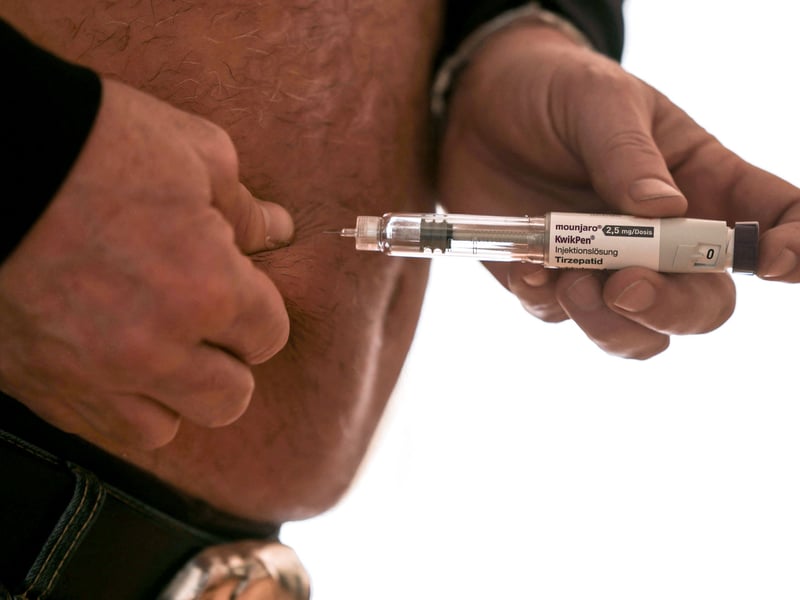
MANCHESTER, England (CN) — Sales of the popular weight-loss jab Mounjaro were suspended to U.K. wholesalers, after patients rushed to stockpile supplies ahead of a steep price rise starting Monday.
Eli Lilly, the U.S. pharmaceutical company and creator of the drug, increased the monthly cost of the highest dose from $165 to $445 — a 170% jump.
Pharmacies say they began running low in August, with some users buying months’ worth of injections in advance by creating multiple accounts.
Emily Pegg, the company’s medical associate vice president, said the firm was “sorry for patients who feel that they need to make decisions based on price.”
Eli Lilly has offered U.K. pharmacies a deal to limit the maximum price hike, cutting $108 off the top rate, but Pegg stressed the company can’t control what pharmacies choose to charge their patients.
Around 90% of people in the U.K. who use Mounjaro are paying privately, according to industry estimates, meaning most will feel the impact of the change.
An estimated 1.5 million people are currently taking weight loss drugs, including Mounjaro and Wegovy, prescribed through private prescription and weight loss services.
The National Health Service, which prescribes weight loss drugs for a limited number of patients, will not pay higher prices, as the health service has secured its own discounted rate.
Pressure from Trump
The 170% price spike follows political pressure applied by U.S. President Donald Trump. In July, he sent letters to 17 major pharmaceutical companies, including Eli Lilly, demanding they raise international prices to match rates in the U.S.
Pegg said Trump’s demand was “one factor that we take into account, but we do also want to achieve a price that is more on a par and equal to what we see across Europe.”
Eli Lilly said it initially launched Mounjaro in the U.K. at a “significantly below the European average” to avoid delays in NHS access.
One national retailer, Superdrug, says it is prioritizing customers who are currently using its weight-loss services and asking users to consider switching to Wegovy, a cheaper alternative.
Both drugs work as an appetite suppressant, mimicking a hormone that makes people feel fuller. They are given as weekly injections through pre-filled pens that are administered into the upper arm, thigh or stomach.
Users typically start on a low-level dose before gradually increasing until they reach a maintenance dose.
Life changing but price dependent
For people like Lee, in his mid-30s, who has been on Mounjaro since September 2024 and lost almost 100 pounds, switching may not be an option.
“My Mounjaro journey has probably come to an end,” Lee told his followers in his latest video posted to Facebook. “I’m devastated. I’ve not felt this happy in my body and how I am mentally for — I can’t even tell you how long … . Mounjaro saved my life.”
Lee doesn’t want to switch to Wegovy.
“The symptoms and side effects are apparently worse than Mounjaro,” he said, which he suffered with a lot.
With prices set to soar, he fears his progress will end.
“The price hike is a joke,” he said. “Why they couldn’t lower the prices in the U.S. boggles my brain. It’s just going to force everyone to go to the black market and get the medication in non-secure ways.”
His goal is to lose another 60 pounds, but he only has one more month of supply. “I don’t know what I’m going to do after it,” he said. “I’m petrified of going back to the way I was.”
Research suggests that when coming off the jab, people put most of the weight back on within a year, as normal food cravings return.
One study by the Oxford Biomedical Research Centre concluded that people regain weight faster than with weight management programs, and “sounds a cautionary note to the use of these medications without a more comprehensive approach to the treatment of obesity and prevention of weight regain."
Jasmine has been taking Mounjaro since March and has lost 30 pounds.
“So far I’ve gone from a size 22 down to a size 10,” she said.
Before Mounjaro, she had lost 56 pounds through diet and exercise before losing her motivation. All the weight returned before she decided to go on Mounjaro.
“The journey has been pretty easygoing, really. I started on 2.5 mg with no side effects, and then after a month, I moved up to 5 mg. My appetite completely disappeared, and it was a struggle to eat at times,” she said.
When Jasmine moved up to 7.5 mg the side effects really hit.
“I was going 2-3 days at a time without eating anything,” she added. “If I spoke too much or too fast, I would start dry-heaving to the point of almost vomiting. I also got bad stomach cramps.”
Buying from a private provider, Jasmine receives regular check-in emails containing a support pack. She hasn’t contacted them for support but says it’s there in case she needs them.
Jasmine says the rise in cost will not stop her. “The price increase isn’t ideal, but it won’t stop me from continuing my journey on Mounjaro,” she said. “I’ll just have to take a little extra overtime at work.”
NHS rollout
Mounjaro, also known as tirzepatide, became available through the National Health Service in England and Wales in June.
About 240,000 people could be offered the drug for obesity over the next three years. As many as 3.4 million could eventually qualify for the injection through the NHS.
Online pharmacies have had to tighten their checks following concerns about unsafe prescribing of medicines.
In February, new guidance came into force to prevent people at a healthy weight or with a history of eating disorders buying weight loss jabs.
Previously, online pharmacies could sell these drugs to people who completed an online questionnaire. Now, in-person or video consultations are required alongside sharing medical records.
The U.K.’s obesity crisis
The U.K. has one of the highest obesity rates in Europe, with one in four adults classified as obese. Extra weight is linked to serious health problems, including type 2 diabetes, cardiovascular disease and some forms of cancer.
The NHS currently spends billions each year on treating obesity-related conditions, adding to wider pressures on the service.
Traditional strategies to cut obesity have focused on diet and exercise. But for many, lifestyle changes are hard to maintain.
Campaigners argue that drugs offer a breakthrough.
Critics, however, warn of the risks of over-reliance on medication, particularly with long-term side effects still unclear and supply chains under strain.
For Lee, the long-term benefits that Mounjaro promises could also lift costs from the NHS, too.
“The health complications that come with obesity, the money it will save on surgeries,” he said, suggesting a comparison of the costs involved in NHS-funded Mounjaro programs with the upkeep of obesity-related illnesses.
 Follow @jayfranklinlive
Subscribe to our free newsletters
Our weekly newsletter Closing Arguments offers the latest about ongoing trials, major litigation and rulings in courthouses around the U.S. and the world, while the monthly Under the Lights dishes the legal dirt from Hollywood, sports, Big Tech and the arts.