
 Search Articles


BRUSSELS (CN) — Ask a European how the European Union works and you will likely get a shrug. But the list of how it affects them is long: The price of their phone bill, the safety of their food, the ease with which they crossed a border, the data their bank holds on them.
The EU shapes daily life across a continent of 450 million people with a thoroughness that would surprise most of the people who live under it. It has a flag, a currency, a Parliament and a court. It sets digital rules that U.S. tech companies hate and trade deals that move markets.
The European Union has the trappings of a country. It is not one.
“The EU is three things,” said Marylou Hamm, a researcher at SciencesPo in Paris. “It’s a project of states that decided to share decisions. It’s a set of institutions. And it’s a government around what we frame as European problems.”
In a handful of areas — trade policy, competition rules, the customs union — it acts alone, with the force of law, on behalf of all 27 members. Yet for all its reach, its members have never agreed to share a military.
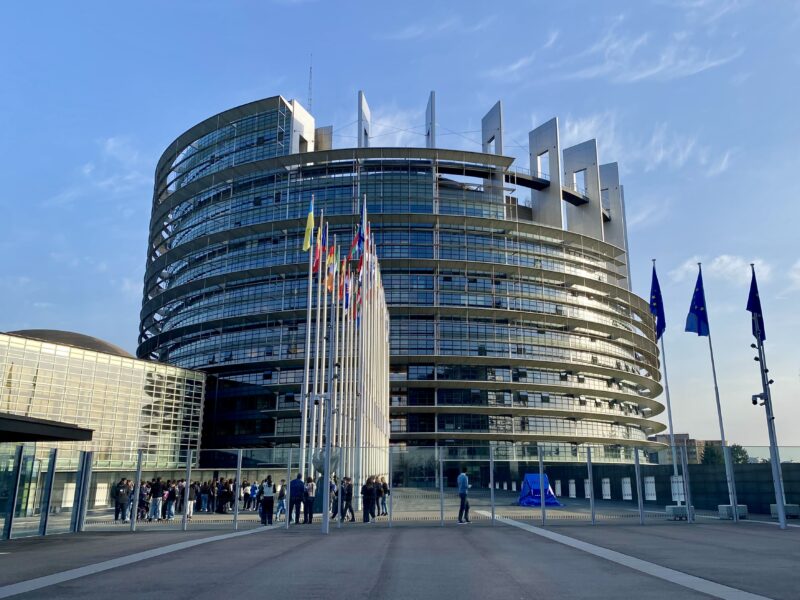
Brussels comes closest to a capital — it is where the European Commission, the EU’s executive, is based — but the main bodies are spread across three cities, with Strasbourg, France, hosting the European Parliament and Luxembourg home to the Court of Justice.
Twenty-one of the 27 members use the euro — Bulgaria became the latest in January — while others, including Poland and Sweden, have kept their own currencies. The European Central Bank in Frankfurt manages monetary policy for the currency bloc, functioning broadly as its equivalent of the U.S. Federal Reserve.
The federal analogy is tempting but misleading. The EU’s central budget is about 1% of the bloc’s combined economic output — a fraction of the 24% Washington spends on federal programs. In key areas, any single member state can veto. It is less a federation than a very legalistic alliance, one that started with six countries in 1951 and today spans the continent from Portugal to Finland.
First stop: Brussels
The Quartier Européen — glass-and-steel towers in eastern Brussels, its pavements thick with lobbyists, bureaucrats and politicians. The cafes run to specialty coffee and Japanese bento boxes. Nobody is speaking French.
That would surprise someone who last visited 30 years ago, when French was the working language of European diplomacy. English has since taken over almost entirely — on the streets, in the meeting rooms, in the corridors of the vast buildings lining the Rue de la Loi. The irony is not lost on anyone: The EU’s lingua franca is now the language of the country that left it in 2020 — the United Kingdom.
“The joke is that people who work for the European Union are in an eternal Erasmus,” said a parliamentary aide who asked not to be identified, referring to the EU’s flagship student exchange program. “They really enjoyed their Erasmus and decided to never leave.”
The choice of Brussels was itself political — and opportunistic. Belgium is a country divided between Dutch-speaking Flanders and French-speaking Wallonia, with Brussels caught in the middle. When European institutions began looking for permanent homes in the late 1950s, Belgian officials and developers moved faster than anyone else, demolishing the elegant townhouses of the old Leopold Quarter and replacing them with office towers.
Architects have a word for what happened to the neighborhood: Brusselization.
“The Avenue du Trone — the boulevard marking the eastern edge of the European quarter — is the color line of Brussels,” the aide said. “On one side you have the Congolese neighborhood, tied to Belgium’s colonial history. You cross it and all of a sudden you’re in consultant town.”
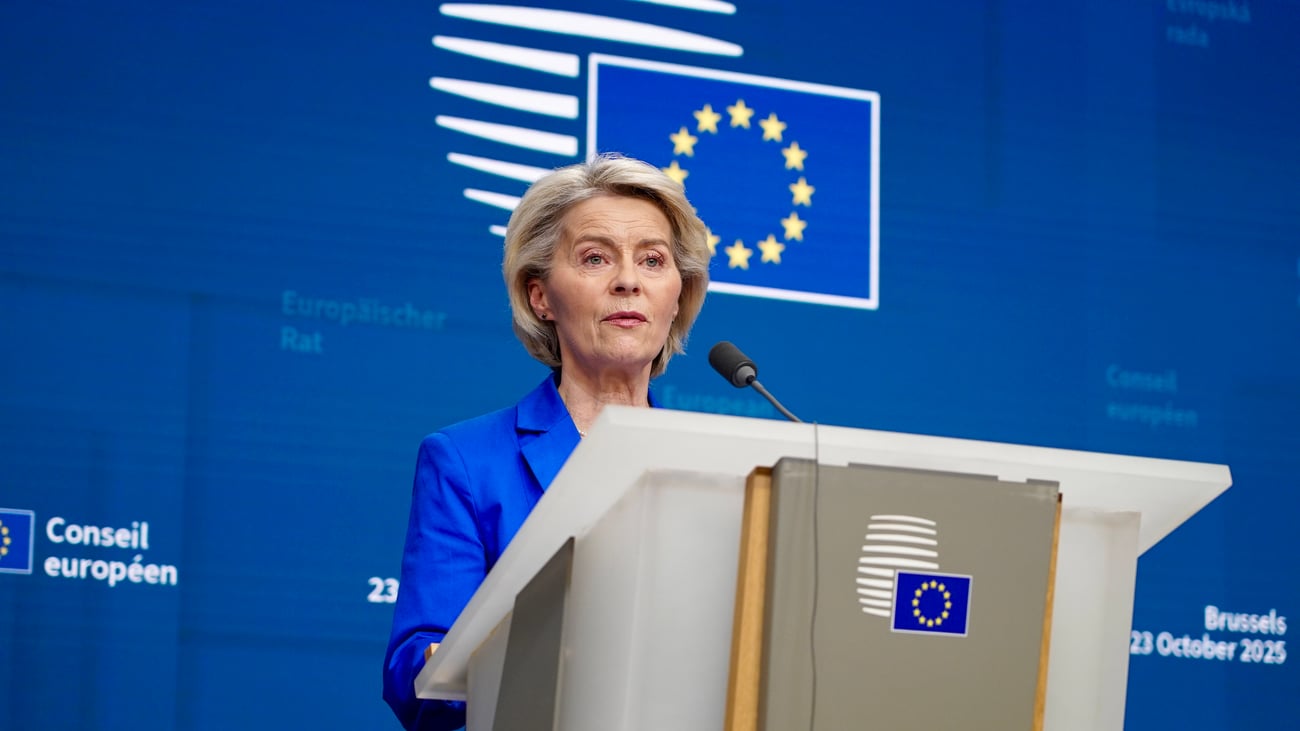
At the center stands the Berlaymont — a 1960s cruciform tower housing the European Commission. The commission proposes legislation, enforces EU law and represents the bloc in trade negotiations. Its president, currently Ursula von der Leyen of Germany, is chosen by member state governments and confirmed by the Parliament. When the EU slaps tariffs on Chinese electric vehicles or fines a tech giant for breaching its digital rules, that is the commission acting.
A short walk away, in a building that resembles a stack of smoked-glass discs, sits the Council of the EU. Not to be confused with the European Council, the separate body where heads of government meet — Brussels runs on such distinctions. The council is where the real horse-trading happens — with ministers meeting by policy area to negotiate the final shape of EU legislation.
“You can see Brussels as a Belgian capital — the Royal Palace, the Royal Park, the Grand Place,” said Géry Leloutre, an urban historian at the Université Libre de Bruxelles. “But if you talk about Europe, it’s not clear at all.”
The EU has never built a monument to itself here. What it has done, quietly and without fanfare, is retrofit — taking existing buildings, adapting them, making them work.
“You are not producing any kind of image of Brussels as the capital of Europe,” Leloutre said. “You are just recycling. It’s a low-profile transformation — not fancy at all. But maybe that is the right way.”
The European Parliament also keeps a home here — a building so self-contained it has its own supermarket, dry cleaners and hairdresser. A small city within the city.
Next, Strasbourg
Two hundred and fifty miles east of Brussels sits a medieval city that has changed nationality more times than most Europeans care to remember. Strasbourg has been French, German, French again — a border town whose whole history is a lesson in the continent’s capacity for reinvention. One week a month, it becomes something stranger.
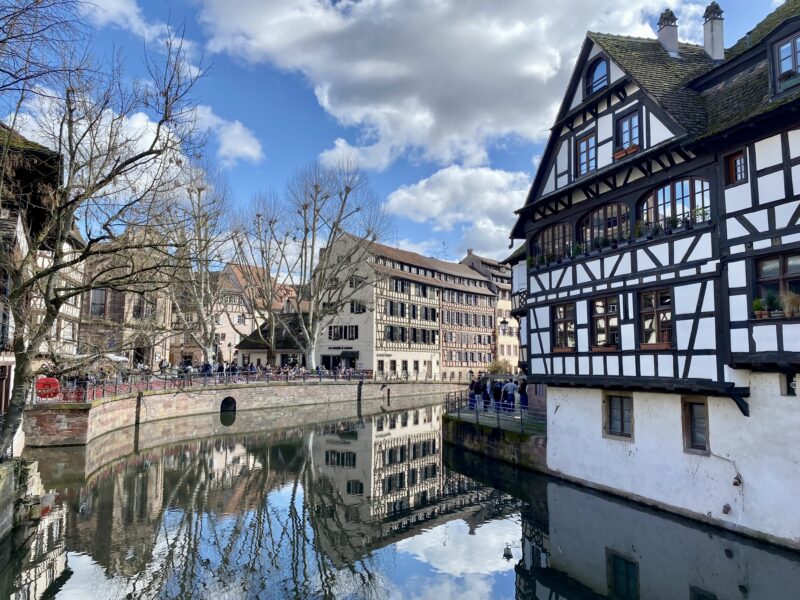
That’s when 700 lawmakers roll in — by plane, car and dedicated train, staff and truckloads of documents in tow. Restaurants fill with politicians and interns powering through plates of choucroute and Alsatian sausages. Hotels charge accordingly. Then everyone leaves.
“It has a Hogwarts feeling,” said an assistant to a Dutch member of the European Parliament, known as MEPs, who also asked not to be named. “You’re on the train with your entire workplace. Political groups aren’t separated, so you can end up sitting next to anyone — and everyone can hear everything.”
Overlooking the cherry trees and magnolias is the Louise Weiss building — vast, glass, vaguely menacing, its elliptical tower reflected in the River Ill. Inside is the hemicycle, the Parliament’s main chamber.
“When I saw it from outside for the first time I really thought it was like Mordor,” the MEP assistant said. “Like where the villain lives.”
Its top floor is deliberately left unfinished. The architects meant it as a statement: The European project, always a work in progress.
The Parliament that meets here is the EU’s only directly elected institution, with members chosen every five years across all 27 countries. It shares legislative power with the council, approves the EU budget and has grown steadily more assertive — though it still cannot initiate legislation on its own.
“In Brussels you feel the disconnect between the Parliament and the rest of the city,” the MEP assistant said. “In Strasbourg it fits better aesthetically — but practically it’s way more disconnected. You go from Parliament to restaurant to hotel and back. You never interact with locals at all.”
Though most lawmakers would rather skip the trip — the bulk of parliamentary work happens in Brussels — the monthly migration costs an estimated 114 million euros a year. The arrangement is enshrined in EU treaties that require unanimous agreement to change. France has made clear it will veto any attempt to move. So it persists.
Subject to revision
The EU that exists today is not the EU of five years ago — and the one taking shape now may look different still.
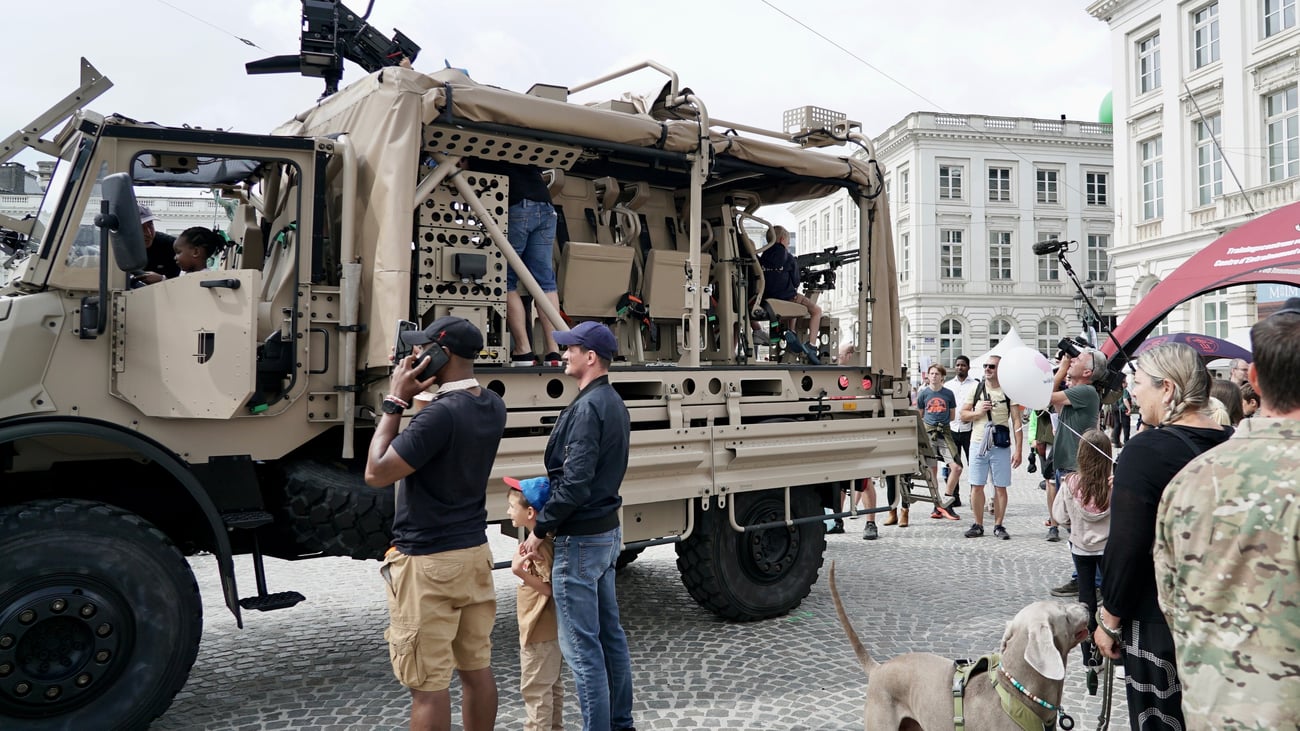
Russia’s invasion of Ukraine did what 70 years of political argument could not. Europe is rearming. The bloc is mobilizing up to 800 billion euros — the largest defense buildup on the continent since the World War II. For the first time, EU money is flowing into joint weapons procurement. Whether that produces something resembling a common military — long a federalist dream and a sovereigntist nightmare — nobody yet knows.
Nine countries are in the queue to join — from the Western Balkans to Moldova and Ukraine, whose candidacy would have been unthinkable before the invasion. If the current wave runs its course, the bloc could reach 35 or more members, and would need to overhaul voting rules built for a much smaller club.
And then there is Washington. The EU was built in the shadow of U.S. power — NATO, the Marshall Plan, the security umbrella that allowed Europe to spend on welfare states instead of armies. That assumption is now being stress-tested.
“There is never a clear path when you are talking about the European Union,” Hamm said. “It’s a story of adaptation and shifts — but also possible fragmentation.”
Scholars have a term for it: accidental federalism — each crisis producing more integration than leaders intended, though never quite as much as federalists hoped.
And from all of that emerged the world’s largest single market, one of its biggest trading blocs, and a body of law that shapes the daily lives of 450 million people and beyond. It is a structure built without blueprints, revised without architects, expanded without agreement — and, against considerable odds, still standing.
Courthouse News correspondent Yuval Molina is based in Brussels.
Subscribe to our free newsletters
Our weekly newsletter Closing Arguments offers the latest about ongoing trials, major litigation and rulings in courthouses around the U.S. and the world, while the monthly Under the Lights dishes the legal dirt from Hollywood, sports, Big Tech and the arts.
Additional Reads
 Suffer the little children April 10, 2026
 Washington state millionaire tax faces legal challenge April 9, 2026