
 Search Articles


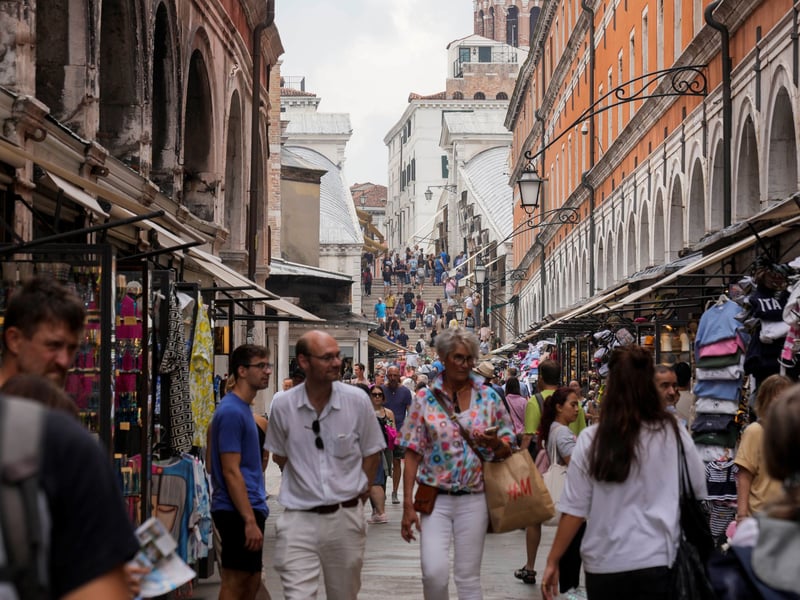
(CN) — Tourists visiting European Union member states spent a record high of nearly 3 billion nights in the bloc last year, according to data published by Eurostat on Friday.
“Longer term evolution shows tourism levels in 2024 that were nearly 50% above those of 15 years ago (from 2 billion nights spent in 2009 to 3 billion in 2024), and 4% above the 2019 pre-pandemic level,” researchers said in a report.
In 2020, tourist nights spent across the board dropped below 1.5 billion as travel largely halted. As soon as travel seemed safe again, however, EU visits quickly rebounded with 2022’s numbers falling just shy of 2019’s 2.88 billion, and 2024 representing a 2% bump from 2023. There were 53.4 million more nights spent in EU tourist accommodations last year than in 2023.
Domestic tourists still outpace international guests, a trend dating back to at least 2009, when Eurostat started reporting the data. International tourists’ stays increased last year, with 58.7 million more nights spent than in 2023. Domestic travel declined a hair in the same period, with people spending 5.2 million fewer nights in their home countries in 2024.
Most tourists visiting the EU prefer hotels, with businesses reporting 1.8 billion nights booked in 2024, roughly two-thirds of the 2.99 billion nights visitors spent in the bloc’s nations last year. People spent an estimated 711 million nights in short-term accommodations, and they camped over 396 million nights.
EU camping is most popular in France, where 51% of visitors chose to sleep outside during the third quarter of last year. A larger percentage of visitors to Luxembourg and Denmark also chose camping, as did a growing number of Spanish tourists.
With 22% more nights spent in 2024 than the prior year, Luxembourg reported the highest increase in welcoming travelers last year, followed by Malta and Latvia. France and Belgium reported the highest decreases in tourism, seeing 1% fewer nights spent last year.
“Tourism is an important activity in the EU which contributes to employment and economic growth, as well as to the development of rural, peripheral or less-developed areas. Tourism is estimated to account for 4.5% to the EU’s gross value added,” researchers said.
Along with tourism, economists look to inflation to measure the strength of the EU’s economy. Though Eurostat found the EU’s inflation rate dropped to 2.7% in December 2024 from 3.4% in 2023, the figure remains well above the European Central Bank’s goal of 2% over the next year.
 Follow @bright_lamp
Subscribe to our free newsletters
Our weekly newsletter Closing Arguments offers the latest about ongoing trials, major litigation and rulings in courthouses around the U.S. and the world, while the monthly Under the Lights dishes the legal dirt from Hollywood, sports, Big Tech and the arts.